
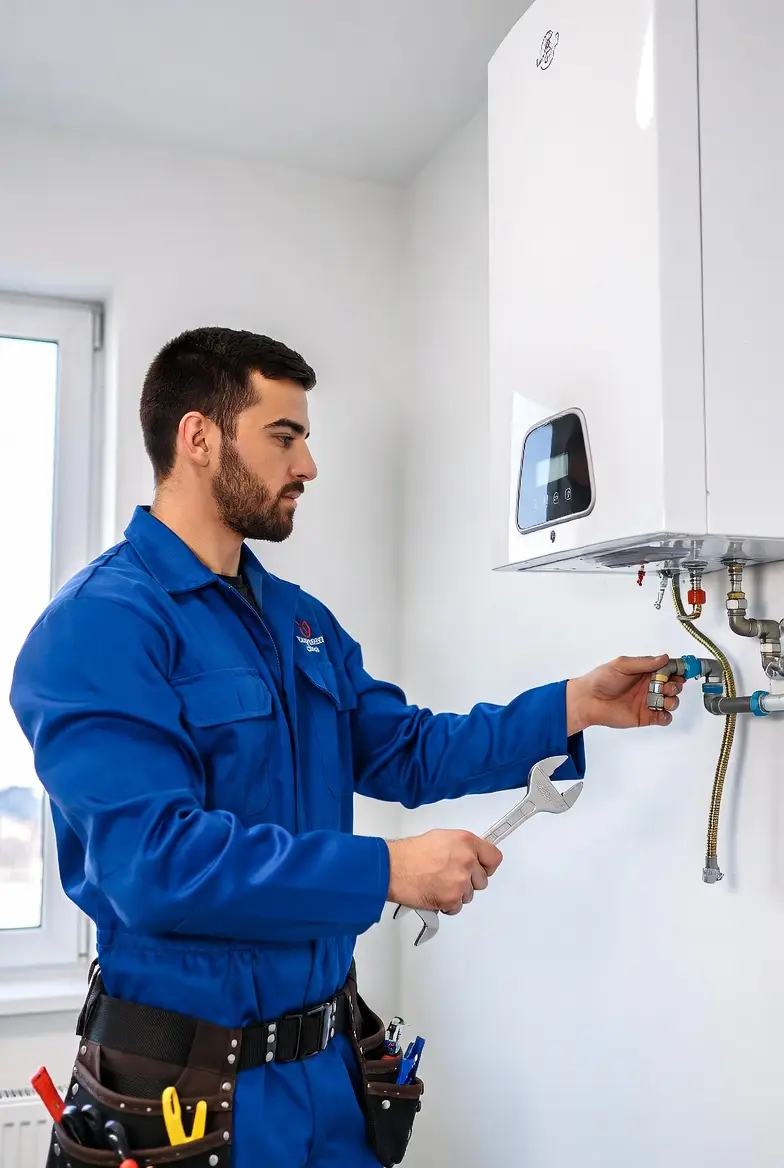
The labor cost to install a tankless water heater typically ranges from $800 to $2,500, depending on whether the job is a simple replacement, a first-time tank-to-tankless conversion, or a complex installation with difficult access.
Labor commonly accounts for about 30% to 45% of the total installed price. The heater itself, permits, venting materials, gas-line work, electrical upgrades, and replacement parts should normally be priced separately.
This guide explains how much tankless water heater installation labor should cost, how many hours installers usually spend on the job, what legitimately increases the labor charge, and how to identify vague or inflated quotes.
Labor Cost to Install a Tankless Water Heater: Quick Snapshot
Simple tankless replacement: $800–$1,200 | 4–6 hours
Standard first-time installation: $1,200–$1,800 | 6–10 hours
Complex installation or difficult access: $1,800–$2,500+ | 10–16+ hours These are typical U.S. labor-only planning ranges. They do not include the tankless unit, permits, venting materials, gas-line upgrades, electrical work, disposal fees, or replacement parts.
What “Labor Cost” Really Covers in a Tankless Install
Labor cost covers the skilled work required to remove the old unit, install the new tankless heater, connect the system safely, and verify that it operates correctly. It should not be used as a vague label for equipment, permits, or upgrade materials.
Legitimate labor tasks usually include:
- Removing and disconnecting the old water heater
- Mounting and securing the tankless unit
- Connecting hot and cold water lines
- Connecting gas or electrical service
- Aligning or connecting the vent system
- Installing condensate drainage where required
- Pressure testing and checking for leaks
- Starting, calibrating, and commissioning the unit
- Performing final safety and performance checks
Tankless installations require more precise setup and testing than many traditional tank replacements, which is why labor charges are often higher.
Why Tankless Labor Costs More Than Tank Labor
Tankless installation labor usually costs more because the work requires more precise setup, testing, and coordination than a standard tank replacement.
A tankless installer may need to:
- Verify gas pressure or electrical capacity
- Confirm venting and combustion requirements
- Adjust water flow and temperature settings
- Test the unit under load
- Complete startup calibration
- Check for error codes, short-cycling, or performance issues
A straightforward tank replacement may involve fewer technical steps. A tankless system, especially during a first-time conversion, often requires more skilled labor and more time on site.
Labor Cost by Installation Complexity (With Hours)
Simple Tankless Swap (Lowest Labor)
A simple tankless replacement applies when an existing tankless unit is being swapped for a similar model in the same location, with compatible venting and connections already in place.
Typical labor cost: $800–$1,200
Typical time on site: 4–6 hours
This is usually the lowest-cost labor scenario because the installer does not need to redesign the layout, convert the fuel setup, or make major plumbing changes
Standard Tankless Installation (Most Homes)
A standard tankless installation usually involves converting from a traditional tank water heater to a tankless system in an accessible location, without major gas-line, electrical-panel, or structural upgrades.
Typical labor cost: $1,200–$1,800
Typical time on site: 6–10 hours
This is the most common labor range for homeowners making a first-time switch to tankless. The installer may need to adjust plumbing, mount the new unit, connect venting, and complete startup testing, but the job does not require extensive upgrades.Labor Cost by Fuel Type
Complex Installation (High Labor)
A complex installation applies when the heater is in a difficult location, such as an attic, crawl space, or tight closet, or when the installer must modify venting, drain lines, plumbing alignment, or mounting.
Typical labor cost: $1,800–$2,500+
Typical time on site: 10–16+ hours
Labor rises because access is slower, setup requires more precision, and additional testing may be needed. Any major materials, gas-line upgrades, electrical work, permits, or structural changes should still be listed separately from the labor charge.
Labor vs Upgrades: Don’t Let Quotes Blur the Line
One of the most common quote problems is bundling materials, permits, and system upgrades into one vague labor charge. Labor should describe the installer’s time and skilled work—not every expense connected to the project.
Costs that should normally be listed separately include:
- Tankless water heater unit
- Gas piping and fittings
- Electrical wiring, breakers, or panel upgrades
- Venting materials
- Condensate drain parts or neutralizers
- Permit and inspection fees
- Old-unit removal or disposal, when charged separately
Ask the contractor for an itemized quote showing labor, equipment, materials, permits, and upgrades as separate line items. This makes it much easier to compare bids and spot unnecessary markups.
What Legitimately Increases Labor Hours (And Cost)
Higher labor charges are reasonable when the installation genuinely requires more time, skill, or coordination.
Common reasons include:
- Difficult access in an attic, crawl space, or tight closet
- Longer or more complicated vent routing
- Relocating the heater or changing plumbing alignment
- Corroded or outdated connections that must be corrected
- Condensate drainage work
- Multiple trades, such as a plumber and electrician
- Extra startup troubleshooting or calibration
- Code corrections required before the unit can pass inspection
A higher labor quote is not automatically an overcharge. The contractor should be able to explain which conditions add time and how those conditions affect the final price.
What Does NOT Justify Higher Labor
Some factors may affect the overall project price but do not usually justify a major increase in labor by themselves.
Be cautious when a contractor uses these as the main reason for a large labor charge:
- Brand choice alone
- Routine code verification
- Standard permit paperwork
- A basic final inspection
- Minor fitting adjustments
- Normal startup testing
These tasks may add some time, but they should not create a large labor increase unless they are tied to a real installation problem, difficult access, or required upgrades.
Typical Hourly Rates (Context Only)
Most contractors quote tankless installations as a flat project price rather than an hourly rate. Still, understanding the effective hourly cost helps you judge whether the labor charge is reasonable.
Typical effective labor rate: about $75–$150 per labor-hour
Rates may be higher in expensive metropolitan areas, for licensed specialists, or when two technicians are required. Rural markets and lower-overhead contractors may charge less.
Remember that two installers working for six hours create 12 labor-hours, not six. At an effective rate of $100 per labor-hour, that would equal about $1,200 in labor.
If the quote implies a much higher labor rate, ask the contractor to explain the crew size, expected hours, access difficulty, and specialized work involved.
Labor Cost by Fuel Type (Context, Not Pricing)
Gas Tankless Water Heater Labor
Gas tankless installations usually require more setup and testing because the contractor may need to verify gas pressure, connect or adjust venting, check combustion air, and calibrate the burner.
Labor is often higher when the job involves a first-time conversion from a tank heater, especially if the existing gas line or vent system is not suitable.
Electric Tankless Water Heater Labor
Electric tankless installations may involve less venting work, but they often require coordination with an electrician.
The installer may need to verify panel capacity, install dedicated circuits, run heavy-gauge wiring, and add new breakers. Those electrical upgrades should normally be listed separately from the basic water-heater labor charge.
How Location Affects Tankless Installation Labor
Tankless installation labor varies by market because contractor rates, licensing costs, demand, and operating expenses differ across the country.
Typical patterns include:
- High-cost metropolitan areas: Higher labor rates and longer scheduling times
- Union-heavy markets: Higher baseline labor charges
- Rural areas: Lower hourly rates, but possible travel charges
- High-demand seasons: Higher quotes when installers are heavily booked
- Areas with stricter permitting: More administrative and inspection time
Location affects the price, but the contractor should still explain the labor hours, crew size, and installation difficulty rather than relying only on a vague “local market rate.”
Labor as a Share of the Total Installation Cost
Labor commonly represents about 30% to 45% of the total installed cost of a tankless water heater.
For example, if the total project costs $4,000, a labor charge between roughly $1,200 and $1,800 may be reasonable for a standard installation.
However, the percentage can change significantly:
- A simple tankless replacement may have a lower total project price but a relatively large labor percentage.
- A first-time conversion involving expensive gas-line, electrical, or venting upgrades may have a lower labor percentage because materials and upgrade work dominate the price.
- A difficult attic or crawl-space installation may have a higher labor percentage because access increases the hours required.
If labor alone accounts for more than half of the total quote, ask the contractor to explain the crew size, estimated hours, access difficulty, and any specialized work included.
Common Tankless Installation Labor Overpay Traps
A high labor price is not automatically unfair, but vague or poorly explained pricing should be questioned.
Common warning signs include:
- One flat “installation” charge with no breakdown
- Materials and upgrades hidden inside the labor line
- Permit-processing fees described as installation labor
- Inflated hours without difficult access or technical complications
- The same work charged under more than one line item
- A major labor increase based only on the heater brand
- Disposal, travel, or inspection fees added without explanation
The goal is not necessarily to choose the cheapest contractor. It is to understand exactly what you are paying for.
How to Read the Labor Section of an Installation Quote
A clear tankless installation quote should explain:
- Estimated time on site
- Number of installers involved
- Basic labor charge
- Equipment cost
- Materials and fittings
- Gas, electrical, or venting upgrades
- Permit and inspection fees
- Old-unit removal and disposal
- Workmanship warranty
Ask for an itemized quote before approving the project. This allows you to compare contractors fairly instead of comparing two vague totals that may include completely different work.
Questions to Ask Before Accepting a Labor Quote
Before choosing an installer, ask:
- How many technicians will work on the installation?
- How many hours do you expect the job to take?
- Is this a simple replacement or a first-time tankless conversion?
- Are materials included in the labor charge?
- Are permits and inspections priced separately?
- Does the quote include removal of the old heater?
- Are gas-line, venting, or electrical upgrades required?
- What workmanship warranty is included?
- Could anything discovered during installation increase the labor cost?
A reputable installer should be able to answer these questions clearly.
When Paying More for Labor Can Be Worth It
Higher labor charges may be reasonable when:
- The installer is a qualified installation professional with tankless-system experience
- The installation location is difficult to access
- Gas pressure, venting, or electrical capacity requires careful testing
- The contractor provides a strong workmanship warranty
- The unit requires detailed startup calibration
- Code corrections are needed for a safe installation
- Multiple licensed trades must coordinate the work
Poor installation can cause error codes, unstable temperatures, poor flow, exhaust problems, leaks, and premature equipment failure.
Paying for qualified labor can therefore be cheaper than correcting a bad installation later.
Quick Fair-Labor Checklist
Before approving the quote, confirm:
- The hours match the complexity of the installation.
- The crew size is clearly explained.
- Labor is separated from equipment and upgrade materials.
- Permit and inspection fees are identified.
- Difficult access or additional work is documented.
- The installer explains anything that could increase the final price.
- A workmanship warranty is included.
If the contractor can explain each major charge clearly, the labor price is more likely to be reasonable.
Frequently Asked Questions
How much is labor to install a tankless water heater?
Labor typically costs about $800 to $2,500, depending on whether the job is a simple tankless replacement, a first-time conversion, or a complex installation involving difficult access and additional setup.
How long does a tankless water heater installation take?
A simple replacement may take around 4 to 6 hours. A standard first-time installation often takes 6 to 10 hours, while a complex job may require 10 to 16 hours or more.
Do plumbers charge hourly or a flat rate?
Many plumbing companies quote tankless installation as a flat project price. However, understanding the estimated hours and crew size can help you determine whether that flat labor charge is reasonable.
Is electrical work included in tankless installation labor?
Basic connection work may be included, but new circuits, breakers, heavy-gauge wiring, and electrical-panel upgrades are often charged separately and may require a licensed electrician.
Does replacing an existing tankless unit cost less?
Usually, yes. Replacing an existing tankless heater with a compatible unit in the same location is generally cheaper because the mounting, plumbing, venting, gas, or electrical connections may already be suitable.
Are permits included in the labor charge?
Permit and inspection fees should normally appear as separate line items. The contractor may charge for the time required to obtain permits, but the actual government fee should not be hidden inside a vague labor total.
Bottom Line
The labor cost to install a tankless water heater usually ranges from $800 to $2,500, depending on the installation type, crew size, access, location, and technical complexity.
A simple tankless replacement will normally fall near the lower end of the range. A first-time conversion or difficult installation may require substantially more time and skilled work.
The best way to avoid overpaying is to request an itemized quote that separates labor from the heater, materials, permits, disposal, and system upgrades. A fair contractor should be able to explain the expected hours, crew size, and reasons behind every major charge.