
Tank Water Heater Installation Cost
A tank water heater remains the most widely installed hot-water system in U.S. homes. It’s familiar, dependable, and usually the fastest way to restore hot water when a unit fails.
Because tank systems are simpler than tankless or hybrid models, many homeowners assume installation costs are straightforward. In reality, pricing can vary widely—even for similar tank heaters installed in similar homes.
That variation rarely comes from the tank itself.
This guide explains tank water heater installation costs, what’s typically included, what drives prices higher, and how to understand quotes without overpaying or under-scoping the job.
Typical tank water heater installation cost (quick snapshot)
Across most U.S. regions, homeowners usually fall into these ranges for a standard tank water heater installation:
Installation scenario Typical total cost
Basic tank replacement $800 – $1,500
Replacement with code updates $1,200 – $2,200
New tank installation $1,600 – $3,000+
These are installed prices, including labor and standard materials—not just the cost of the heater.
Why tank water heater installations stay cheaper than other systems
Tank water heaters continue to dominate the market because:
Plumbing layouts are standardized
Most homes are already designed to support them
Venting and safety rules are well established
Parts and labor are widely available
Compared to tankless systems, tank installs usually:
Tankless water heater installation cost
- Take less time
- Require fewer electrical or gas upgrades
Trigger fewer inspection complications
This keeps labor costs lower and pricing more predictable.
Replacement vs new installation (biggest cost divider)
Tank water heater replacement cost
Replacement means removing an existing tank water heater and installing a new tank unit in the same location, using existing connections where possible.
This is the most common and least expensive scenario.
Replacement costs stay lower because:
- Water supply and drain lines already exist
- Gas or electrical service is already present
- Venting often meets current code
- Permit scope is limited
Most homeowners replacing an old tank fall in the lower half of the price range.
New tank water heater installation cost
A new installation applies when:
The home never had a water heater
The heater is being relocated
The system type is changing
Costs increase because installers may need to:
- Run new water and drain lines
- Add gas piping or electrical circuits
- Install venting
- Modify framing or access points
- Coordinate inspections more closely
New installs almost always land at the upper end of the pricing range.
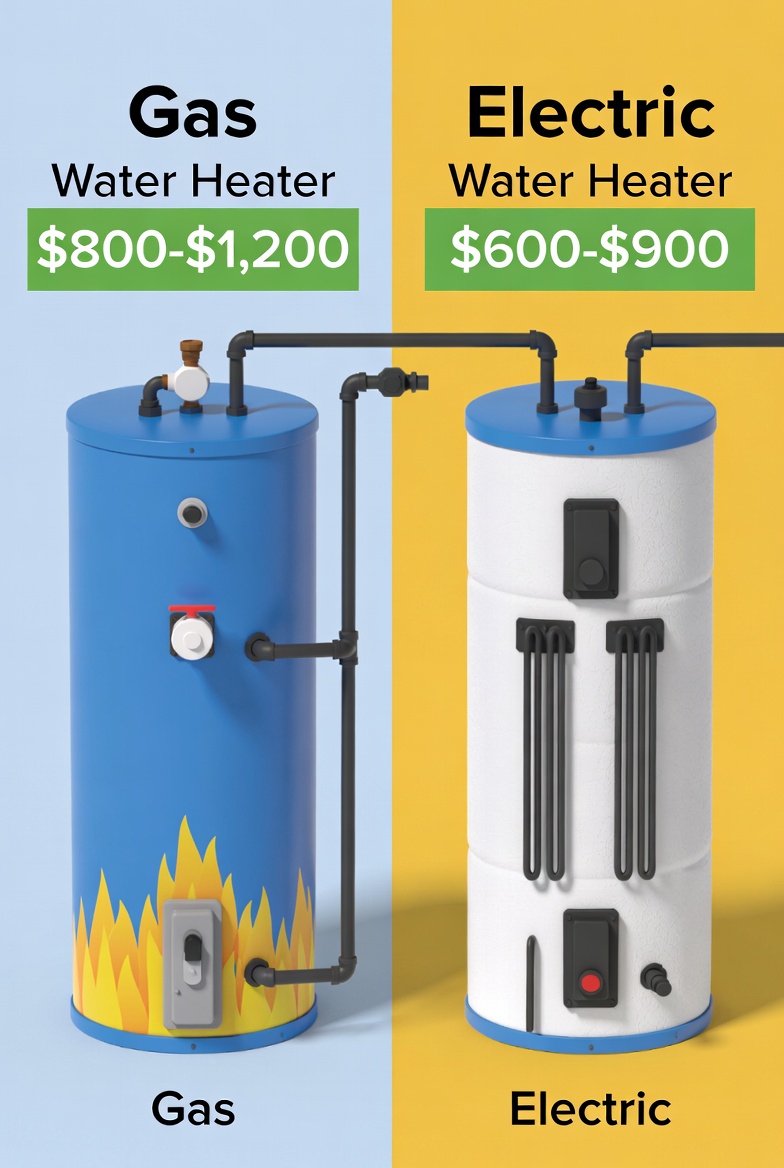
Gas vs electric tank water heater installation costs
Gas vs electric water heater cost
Electric tank water heater
Typical installed cost: $800 – $1,700
Electric tank installs are usually cheaper because:
No venting is required
Fewer safety components apply
Labor time is shorter
Costs rise if:
A new circuit is required
The electrical panel lacks capacity
GFCI or AFCI upgrades are needed
Gas tank water heater
Typical installed cost:
$1,000 – $2,500
Gas tank installs cost more due to:
- Venting requirements
- Gas shutoff and sediment trap rules
- Combustion air standards
- Stricter inspections
Gas systems often cost more upfront but may reduce long-term energy costs.
Labor vs unit cost (how pricing typically breaks down)
For most tank water heater installations:
Tank unit: 35–45%
Labor: 40–50%
Permits & materials: 10–20%
When prices increase unexpectedly, it’s usually due to labor complexity or code compliance, not the heater itself.
What’s included in a standard tank installation
A professional installation quote typically includes:
Removal and disposal of the old water heater
Installation of the new tank unit
Standard plumbing connections
Gas or electrical hookup
Temperature & pressure relief valve setup
Permit and inspection handling (where required)
If any of these items are missing, clarification is essential before approving the job.
What’s often NOT included (but may be required)
Add-on Why it raises cost
Expansion tank Required in many jurisdictions
Drain pan & drain Mandatory for interior or attic installs
Vent pipe replacement Old venting may not meet code
Electrical panel upgrade Needed for some electric tanks
Gas line upsizing Required for higher BTU models
Seismic strapping Required in some regions
Attic or tight-space labor Increased safety and access risk
These are code-driven requirements, not optional upgrades.
Installation location and cost impact
- Garage installations
- Usually the least expensive
- Easy access
- Fewer labor hours
- Closet or interior installations
- Moderate cost increase
Clearance and venting rules apply
Labor time increases
Attic installations
Often $300–$900 more
50 gallon water heater installation cost
Drain pans and safety measures required
Higher labor risk
Permits and inspections: why they matter
Permits typically add $50–$300.
They protect homeowners from:
- Failed resale inspections
- Insurance claim denial
- Unsafe installations
Installers who skip permits often cut corners elsewhere.
How to avoid overpaying for a tank installation
Before approving a quote:
Confirm the system is tank-based
Ask which upgrades are code-required
Request line-item pricing
Verify permits are included
Avoid vague “installation packages”
Clear scope almost always equals fair pricing.
When a tank system may NOT be the best option
A standard tank may not be ideal if:
- Hot water demand is extremely high
- Space is limited
- Energy efficiency is the top priority
Even so, tank systems remain the most economical choice for the majority of homes.
Final advisor takeaway
A tank water heater installation is usually straightforward, but pricing still depends heavily on fuel type, location, and local code requirements.
Most homeowners replacing an existing tank without major upgrades land near the lower end of the range. Understanding what’s included—and what isn’t—is the best way to avoid surprises and ensure fair value.