
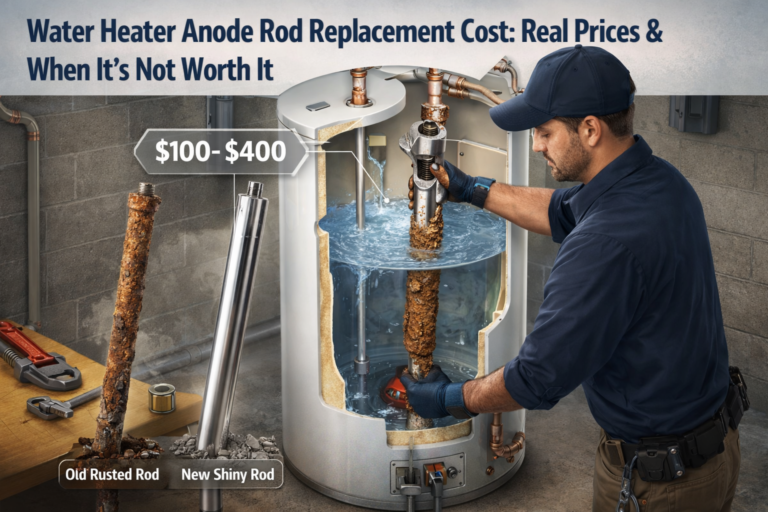
Water heater anode rod replacement typically costs about $200 to $400 when completed by a plumber or water-heater technician. A straightforward replacement with easy access may cost less, while a seized rod, low ceiling, concealed connection or powered anode upgrade can push the total toward $400 to $700 or more.
The replacement rod itself is usually the smaller part of the bill. Labor, access, compatibility and the condition of the existing connection generally have the greatest effect on the final price.
Water heater anode rod replacement cost at a glance
- Conventional sacrificial rod: approximately $20–$80 for the part
- Flexible or segmented rod: approximately $40–$120 for the part
- Powered anode rod: approximately $150–$300 or more for the part
- Standard professional replacement: approximately $200–$400 total
- Difficult or seized-rod replacement: approximately $350–$700 or more
- DIY replacement: approximately $30–$150 before unexpected repairs
These are planning ranges rather than fixed national prices. Local plumbing rates, heater location, rod design, service-call charges and additional fitting work can materially change the final quote.
How Much Does It Cost to Replace a Water Heater Anode Rod?
Most homeowners can expect to pay approximately $200 to $400 for a standard sacrificial anode rod replacement when the water heater is accessible and the existing rod can be removed without major difficulty.
A lower price may be reasonable when the technician is already performing other maintenance, the anode has clear top access and no additional plumbing work is required. A higher quote may be justified when the rod is seized, the ceiling is low, piping blocks access or the heater uses a specialized anode configuration.
| Replacement scenario | Typical total cost | What affects the price |
|---|---|---|
| Easy-access conventional rod | $150–$300 | Direct access, removable rod and limited service time |
| Typical professional replacement | $200–$400 | Service call, standard part, labor, sealing and leak testing |
| Flexible rod for restricted clearance | $250–$500 | Specialized part and additional installation time |
| Seized or heavily corroded rod | $350–$700+ | Extra removal time, tank stabilization and possible fitting work |
| Powered anode installation | $350–$700+ | Higher-cost part, compatibility checks and electrical requirements |
Before approving the work, ask whether the quote includes the replacement rod, service-call charge, labor, pressure relief or partial draining, thread sealing, leak testing, disposal, taxes and any warranty on the installation.
What Does a Water Heater Anode Rod Do?
A conventional storage water heater normally has a steel tank protected by a glass or enamel lining. Because the lining can develop small imperfections or deteriorate over time, manufacturers also use an anode rod to provide additional corrosion protection.
A sacrificial anode is made from a metal that is more reactive than the steel tank. Through an electrochemical process, the rod gradually corrodes while helping protect vulnerable steel surfaces inside the tank.
Common sacrificial anode materials include:
- Magnesium: A common original-equipment and replacement material where the heater specifications and water conditions allow it.
- Aluminum: Used by some manufacturers and in particular water conditions.
- Aluminum-zinc alloy: Sometimes considered when certain hot-water odor problems are being investigated.
A powered anode works differently. Instead of gradually sacrificing its metal body, it uses a small electrical current to provide corrosion protection. Powered anodes cost more and must be compatible with the water heater, electrical supply and manufacturer requirements.
An anode rod does not make a storage tank indestructible. Tank life still depends on water chemistry, lining condition, water temperature, pressure, installation quality, maintenance history and the heater’s overall construction.
A. O. Smith’s tank-safety guidance explains how anode rods help protect the glass lining and steel tank from the corrosive effects of incoming water.
Why Anode Rod Replacement May Be Worth the Cost
Replacing a substantially depleted anode rod may help preserve an otherwise sound storage tank by restoring sacrificial corrosion protection.
The expense is most likely to make financial sense when:
- the tank body is dry and structurally sound
- there is no evidence of active tank leakage
- the heater is otherwise operating reliably
- the existing rod can be replaced without excessive labor
- the replacement part matches the manufacturer’s specifications
- the heater still has enough useful service value to justify maintenance
Anode replacement should not be sold as a guaranteed way to add a specific number of years to the water heater. A healthy rod may help slow future internal corrosion, but it cannot reverse damage that has already penetrated or weakened the tank.
If the tank is leaking, heavily corroded or developing repeated costly failures, compare the anode-rod quote with the expected water heater replacement cost.
Water Heater Anode Rod Cost by Type
The correct replacement rod is not determined by price alone. It must fit the heater, match the connection design and comply with the manufacturer’s part and warranty requirements.
| Anode rod type | Approximate part cost | Important considerations |
|---|---|---|
| Magnesium rod | $20–$80 | Common sacrificial option; model compatibility and water chemistry should be checked |
| Aluminum rod | $20–$70 | May be specified for certain heaters or water conditions |
| Aluminum-zinc rod | $30–$100 | Sometimes considered while diagnosing sulfur-like hot-water odor |
| Flexible or segmented rod | $40–$120 | Useful when ceiling clearance is insufficient for a full-length rigid rod |
| Powered anode rod | $150–$300+ | Higher initial cost; requires model compatibility and a suitable electrical connection |
| Combination anode and outlet nipple | Varies by model | May require pipe disconnection and a model-specific replacement component |
Standard rigid anode rods
A conventional rigid rod is usually the least expensive choice when there is enough space above the water heater. Because many rods extend through much of the tank’s height, removal can be difficult when the ceiling is low or plumbing and ductwork block vertical access.
Flexible and segmented anode rods
A flexible anode consists of connected sections that bend during installation. It is commonly used in closets, attics, crawl spaces and compact utility rooms where a full-length rigid rod cannot be inserted vertically.
The part may cost more than a conventional rigid rod, and installation can require additional time, but it may avoid disconnecting or relocating the entire water heater.
Powered anode rods
A powered anode uses impressed-current protection instead of gradually sacrificing a magnesium or aluminum body. It may be considered when conventional rods deplete unusually quickly, water conditions are challenging or certain odor problems continue.
Before installing a powered anode, confirm:
- compatibility with the exact water-heater model
- availability of a suitable electrical connection
- manufacturer and warranty requirements
- the installation and grounding instructions
- whether it is appropriate for the home’s water conditions
Combination anode rods
Not every anode has a clearly visible hex head on top of the tank. Some water heaters use an anode integrated with the hot-water outlet nipple, while other models may have multiple rods or concealed access points.
A combination design can increase labor because the hot-water piping may need to be disconnected before the anode can be removed. This is one reason a price based only on a generic “anode rod replacement” may be inaccurate.
What Increases Anode Rod Replacement Labor Costs?
Labor usually has a greater effect on the total bill than the cost of a conventional sacrificial rod.
A seized anode rod
An anode rod may become extremely difficult to loosen after years of corrosion, mineral deposits and thread bonding. Removing it can require additional leverage, tank stabilization and care to avoid damaging the threaded tank connection.
The technician must also avoid twisting connected pipes or moving the heater while force is being applied. If the tank cannot be stabilized safely, the removal attempt may need to stop.
Limited overhead clearance
A full-length rod generally requires substantial vertical space above the tank. Low ceilings, shelving, attic framing, ductwork or plumbing can make removal and installation more difficult.
The technician may need to:
- cut the old rod into sections as it is removed
- install a flexible or segmented replacement
- disconnect nearby piping
- temporarily move or tilt the heater
- work carefully in a confined space
Difficult heater location
Attic, crawl-space, closet and finished-room installations can increase labor because access is restricted and surrounding surfaces must be protected from water damage.
An attic installation may require additional precautions to prevent drained water or a leaking fitting from damaging ceilings and rooms below.
Concealed or combination anode design
Some rods are hidden beneath plastic caps, insulation or sheet-metal covers. Combination anodes may require disconnection of the hot-water outlet before the rod can be accessed.
Additional plumbing work
The final price may rise if the technician also needs to replace corroded nipples, repair a leaking connection, modify piping or install a different fitting for the replacement rod.
Local labor and service-call rates
Plumbing rates vary by region. Scheduled service during normal working hours is generally less expensive than emergency, evening or weekend work.
How Do You Know Whether the Anode Rod Needs Replacement?
The most reliable way to judge an anode rod is to inspect its condition rather than relying only on the age of the heater.
Replacement may be recommended when the rod has:
- lost a substantial amount of its original diameter
- large areas of exposed steel core
- deep pitting or missing sections
- broken or detached material
- heavy calcium or sediment coating
- deterioration that limits continued corrosion protection
A heavily coated rod is not necessarily consumed in the same way as a visibly thin rod, but mineral deposits may interfere with its effective exposure to the water. The technician should consider the rod condition, tank condition, water chemistry and manufacturer’s guidance together.
Rheem’s current maintenance guidance recommends inspecting the anode and replacing it when it is significantly corroded, thinned or coated with calcium or sediment.
Age alone does not determine anode condition
Two anode rods of the same age can deteriorate at very different rates. Water conductivity, hardness, water-softener use, temperature, household consumption and rod material can all affect depletion.
A rod exposed to aggressive water conditions may need replacement sooner, while another may remain serviceable for longer. Inspection according to the manufacturer’s schedule is more reliable than assuming every anode lasts a fixed number of years.
The second part of this guide explains DIY versus professional replacement, safety and warranty limits, warning signs, odor problems, replacement frequency, quote questions and when anode replacement is no longer financially worthwhile.
DIY vs. Professional Anode Rod Replacement Cost
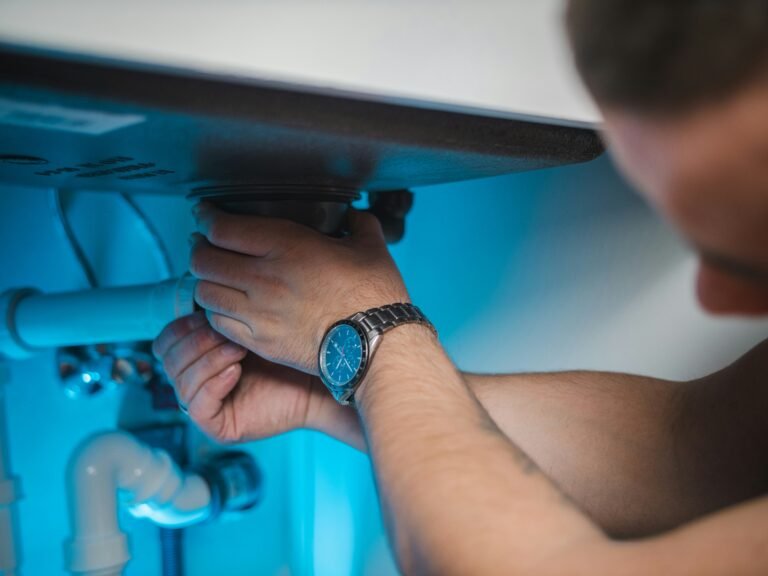
Replacing an anode rod yourself can reduce the immediate cost, but the job may require substantial force, safe shutdown of the water heater, pressure relief, partial draining and careful resealing of the tank connection.
| Replacement option | Typical cost | Main trade-off |
|---|---|---|
| DIY conventional rod replacement | Approximately $30–$150 | Lower initial cost but greater risk of unsuccessful removal, thread damage or leakage |
| Professional standard replacement | Approximately $200–$400 | Professional removal, compatibility checks, resealing, refilling and leak testing |
| Professional difficult-access replacement | Approximately $350–$700+ | Additional labor for seized threads, restricted clearance or plumbing modifications |
DIY safety limit
Anode rod replacement involves hot, pressurized water and may require shutting down gas or high-voltage electrical equipment. Follow the official manual for the exact heater model. Stop if the rod is seized, the tank moves while force is applied, the connection is badly corroded or you cannot safely shut down and depressurize the system.
When DIY replacement may be reasonable
A homeowner may consider DIY replacement when:
- the manufacturer’s manual permits owner maintenance
- the exact replacement rod has been confirmed
- the heater and anode connection are easy to access
- there is enough clearance above the tank
- the existing rod is not heavily seized
- the shutoff valves and fittings are in good condition
- the homeowner understands the shutdown, pressure-relief, draining, refilling and restart procedures
When professional replacement is safer
Professional service is usually the better choice when:
- the rod will not loosen with reasonable force
- the heater twists or shifts during removal
- the anode is concealed or integrated with an outlet fitting
- the ceiling is too low for a rigid replacement rod
- the heater is installed in an attic, closet or finished room
- the top fittings are corroded, wet or leaking
- gas, electrical or plumbing connections must be altered
- the heater remains under manufacturer warranty and the service requirements are unclear
Professional labor should account for identifying the correct rod, stabilizing the tank, avoiding pipe and thread damage, resealing the connection, refilling the heater correctly and checking for leaks before the job is complete.
How to Evaluate an Anode Rod Replacement Quote
A quote should be judged by the work required rather than one universal price ceiling. A $300 quote may be expensive for a simple replacement added to scheduled maintenance, while a $500 quote may be reasonable for a seized combination anode in a cramped attic installation.
| Quoted price | How to interpret it | What to confirm |
|---|---|---|
| Under $200 | Possible for easy access, bundled maintenance or lower local labor rates | Confirm that the correct rod, installation and leak check are included |
| $200–$400 | Common planning range for a standard professional replacement | Confirm the rod type, service-call charge and labor warranty |
| $400–$700+ | May be justified by difficult access, a powered rod, seized threads or additional plumbing | Request an itemized explanation of the added parts and labor |
A complete quote should identify:
- the replacement rod material and design
- whether the part is original equipment or a compatible aftermarket product
- the service-call or diagnostic charge
- the expected labor scope
- whether the existing rod may be seized
- whether piping must be disconnected
- whether draining, refilling and air purging are included
- thread sealing and leak testing
- taxes, travel charges and disposal
- the warranty on the part and labor
Be cautious when a contractor provides a high price without identifying the proposed rod, access complication or additional plumbing work.
When Is Anode Rod Replacement Worth It?
Anode rod replacement generally provides the best value when the storage tank remains structurally sound and the heater has no major unresolved problems.
The work is more likely to make financial sense when:
- the tank body is dry and shows no active leakage
- the heater is otherwise operating reliably
- inspection shows that the existing rod is substantially depleted
- the replacement cost is modest compared with a new installation
- the correct rod remains available for the model
- the tank has not developed severe internal corrosion
- the heater still meets the household’s capacity and efficiency needs
A relatively inexpensive rod replacement can still be worthwhile on an older heater when the tank remains sound and the work is straightforward. Heater age should inform the decision, but it should not decide it by itself.
When Is Anode Rod Replacement Not Worth It?
Replacing the rod may provide poor value when the heater already has a condition the new anode cannot correct.
Consider replacing the heater instead when:
- water is leaking through the tank body
- the tank is severely corroded, bulging or structurally damaged
- multiple expensive components are failing
- the heater remains unreliable after repeated repairs
- the anode job requires extensive plumbing work or tank relocation
- the repair cost approaches a meaningful portion of the installed replacement price
- the current heater no longer meets the household’s hot-water needs
A new anode rod cannot seal a leaking tank, rebuild weakened steel or reverse corrosion that has already damaged the pressure vessel.
When the tank is no longer worth protecting, compare the repair quote with the full cost to replace a water heater.
Does Replacing the Anode Rod Extend Water Heater Life?
A functioning anode rod may help extend the useful life of an otherwise sound steel storage tank by maintaining corrosion protection. However, no contractor can responsibly guarantee that a replacement rod will add a fixed number of years.
The result depends on:
- the condition of the glass or enamel lining
- how much internal corrosion has already occurred
- local water chemistry and electrical conductivity
- whether a water softener is used
- water temperature and household demand
- system pressure and installation conditions
- the replacement rod material and compatibility
The financial benefit is best viewed as risk reduction rather than a guaranteed return. The homeowner is paying to restore corrosion protection—not purchasing a guaranteed extension of tank life.
What Happens When an Anode Rod Is Depleted?
As a sacrificial anode deteriorates, less active material remains available to help protect exposed steel inside the storage tank.
This does not mean the tank will fail immediately. It means the tank has less sacrificial corrosion protection and becomes more dependent on the remaining condition of its internal lining.
Possible long-term consequences include:
- accelerated internal corrosion
- rust-colored debris entering the hot-water system
- premature tank deterioration
- leakage after corrosion penetrates the steel tank
- a shorter remaining service life
Replacing the rod before tank corrosion becomes advanced is more useful than replacing it after the pressure vessel has already begun to leak.
Can an Anode Rod Cause Rotten-Egg Odor?
A sulfur-like or rotten-egg smell in hot water can sometimes involve an interaction among the anode rod, sulfate-reducing bacteria and the home’s water chemistry. The anode may contribute to the conditions that produce hydrogen sulfide gas, but it is not the only possible cause.
Before changing the rod, determine whether:
- the odor occurs only in hot water
- both hot and cold water are affected
- the home uses a private well
- the heater has been unused for an extended period
- the plumbing or incoming water has a bacterial issue
- the manufacturer approves a different anode material
Professional solutions may include disinfecting the heater and plumbing system, correcting water-treatment problems, installing an approved aluminum-zinc rod or using a compatible powered anode.
Do not permanently remove the anode rod merely to eliminate odor unless the heater manufacturer specifically approves that approach. Operating the heater without required anode protection can increase corrosion risk and may affect warranty coverage.
Does Rust-Colored Hot Water Mean the Tank Is Failing?
Rust-colored water does not automatically prove that the storage tank has failed. Possible sources include:
- internal tank corrosion
- corroded hot-water piping
- iron bacteria
- incoming water-supply debris
- recent utility or plumbing work
- particles disturbed during maintenance
Compare several hot- and cold-water fixtures. If discoloration appears only in hot water throughout the home, the water heater or hot-water piping becomes a stronger suspect.
Persistent rusty water should be diagnosed before approving either an anode replacement or a complete heater replacement. A new rod cannot repair steel that has already corroded through, but discoloration alone does not prove that this has happened.
How Often Should an Anode Rod Be Inspected or Replaced?
There is no universal replacement interval that applies to every water heater. Inspection and replacement timing varies by heater model, manufacturer guidance, water chemistry, hot-water demand and the condition found during previous inspections.
The most reliable approach is to:
- check the official manual for the exact heater model
- inspect the anode according to the manufacturer’s schedule
- replace it based on deterioration rather than age alone
- shorten the inspection interval if the rod is depleting rapidly
Anode rods may deteriorate faster when:
- the water has high electrical conductivity
- a water softener is used
- household hot-water consumption is high
- the water temperature is elevated
- the rod material is poorly matched to the water conditions
- the tank lining has more exposed steel
A. O. Smith’s water heater maintenance guidance explains that sacrificial anode life varies according to water quality, hot-water use and water-softener use.
For broader planning beyond the anode rod, use our water heater maintenance schedule.
Will DIY Anode Replacement Affect the Warranty?
Warranty terms vary by manufacturer and model. DIY replacement does not automatically void every water-heater warranty, but damage caused by an incompatible part, improper installation or failure to follow required procedures may not be covered.
Before beginning the work, confirm:
- whether the manufacturer requires an approved replacement part
- whether the work must be performed by a licensed professional
- whether maintenance records or receipts should be retained
- whether altering plumbing or electrical connections affects coverage
- whether permanently removing the factory anode is prohibited
Keep the receipt, replacement part number, installation date and photographs of the removed rod. These records may help document proper maintenance.
Questions to Ask Before Approving the Job
Ask the plumber or technician:
- What condition is the current anode rod in?
- How much of its steel core is exposed?
- Is the rod heavily coated, broken or seized?
- Which replacement material do you recommend, and why?
- Is the proposed rod approved for this heater model?
- Does the heater use a dedicated, concealed or combination anode?
- Is there enough overhead clearance for a rigid rod?
- Will nearby piping need to be disconnected?
- Does the quote include the service call, part, labor, refilling and leak testing?
- Will the work affect the manufacturer’s warranty?
- Is the tank still structurally sound enough to justify the repair?
A contractor should be able to explain why the rod needs replacement and why the proposed part is appropriate for the tank and local water conditions.
How to Protect the New Anode Rod and Tank
Follow a condition-based inspection schedule
Record the installation date and inspect the replacement rod according to the manufacturer’s recommendations. The condition found during the next inspection will help determine whether future checks should occur sooner or later.
Maintain a reasonable water temperature
Excessively high water temperature can increase energy consumption, scald risk and stress on water-heater components. Follow the manufacturer’s instructions when adjusting the control.
Our guide to a safe water heater temperature explains how temperature settings affect household safety and comfort.
If the water remains dangerously hot despite a lower setting, use our troubleshooting guide for a water heater that is too hot.
Flush the tank when recommended
Tank flushing removes loose sediment but does not replace the corrosion protection provided by the anode rod. Both tasks may form part of a complete storage-water-heater maintenance plan.
See our guide to professional water heater flushing costs for typical pricing and service details.
Investigate unusual water conditions
Rapid anode depletion, persistent odor, discoloration or heavy scale may indicate unusual water chemistry. A plumber, water-treatment professional or local water supplier may need to evaluate the cause before another rod is installed.
Frequently Asked Questions
How much does it cost to replace an anode rod in a water heater?
A standard professional replacement commonly costs approximately $200 to $400. Easy-access work may cost less, while a seized rod, powered anode, low ceiling or combination anode can push the total toward $350 to $700 or more.
How much does an anode rod cost by itself?
A conventional magnesium, aluminum or aluminum-zinc rod commonly costs approximately $20 to $100. Flexible rods may cost around $40 to $120, while powered anodes can cost approximately $150 to $300 or more.
How much does a plumber charge to replace an anode rod?
The plumber’s charge may include the service call, labor, replacement part, thread sealing, refilling and leak testing. A standard job often totals approximately $200 to $400, although local labor rates and access conditions can change the price.
Does the water heater need to be completely drained?
Many anode replacement procedures require reducing pressure and draining enough water to lower the level below the anode opening. Some manufacturers or installation conditions may require additional draining. Follow the manual for the exact heater rather than applying one universal procedure.
How long does professional anode rod replacement take?
A straightforward replacement may be completed during a normal service visit. Seized threads, low clearance, concealed rods, pipe disconnection or tank stabilization can substantially increase the time required.
Which water heaters have anode rods?
Most conventional steel storage-tank water heaters use one or more sacrificial or powered anodes. Tankless water heaters generally do not use the same replaceable tank anode because they do not contain a large steel storage vessel. Always confirm the design from the model manual.
Is replacing a water heater anode rod worth it?
It is often worthwhile when the tank is structurally sound, the heater operates reliably and the replacement cost is modest compared with a new installation. It provides poor value when the tank body is already leaking or severely corroded.
Can I replace an anode rod myself?
Some homeowners can replace an accessible and removable rod by following the model-specific manual. Professional service is safer when the rod is seized, access is restricted, the tank moves during removal or warranty requirements are unclear.
How long does an anode rod last?
There is no fixed lifespan. Water chemistry, household use, water temperature, softener use, rod material and tank design all affect depletion. Inspect the rod according to the manufacturer’s schedule and replace it based on condition.
What are the signs of a worn anode rod?
The clearest evidence comes from physical inspection. A rod may need replacement when it is substantially thinned, has extensive exposed steel core, is broken, has missing sections or is heavily coated with mineral deposits.
Can a depleted anode rod cause the water heater to leak?
A depleted rod does not normally cause an immediate leak. It reduces corrosion protection, which may allow internal tank corrosion to progress over time. Once the steel tank itself leaks, anode replacement cannot repair it.
Should I replace the anode rod in a 10-year-old water heater?
Possibly. Age alone is not enough to decide. Replacement may still be worthwhile when the tank is dry, structurally sound and otherwise reliable. It is less attractive when the heater has leakage, severe corrosion or repeated costly failures.
Is a powered anode rod worth the higher cost?
A powered anode may be useful when conventional rods deplete rapidly or certain hot-water odor problems persist. Its value depends on heater compatibility, electrical access, water conditions, warranty requirements and the remaining condition of the tank.
Final Answer
Anode rod replacement is usually a sensible maintenance expense when the storage tank remains structurally sound and the water heater is otherwise reliable. A standard professional job commonly costs approximately $200 to $400, while difficult access, seized threads, combination designs and powered anodes can increase the total.
Do not use heater age as the only decision rule. Base the choice on the condition of the tank, the inspected rod, installation difficulty, repair history, warranty and the cost of a complete replacement.
Replace the rod while it can still protect a healthy tank. Diagnose discoloration and odor before assuming the anode is responsible. Choose full replacement when the tank body is leaking, severely corroded or no longer worth protecting.