
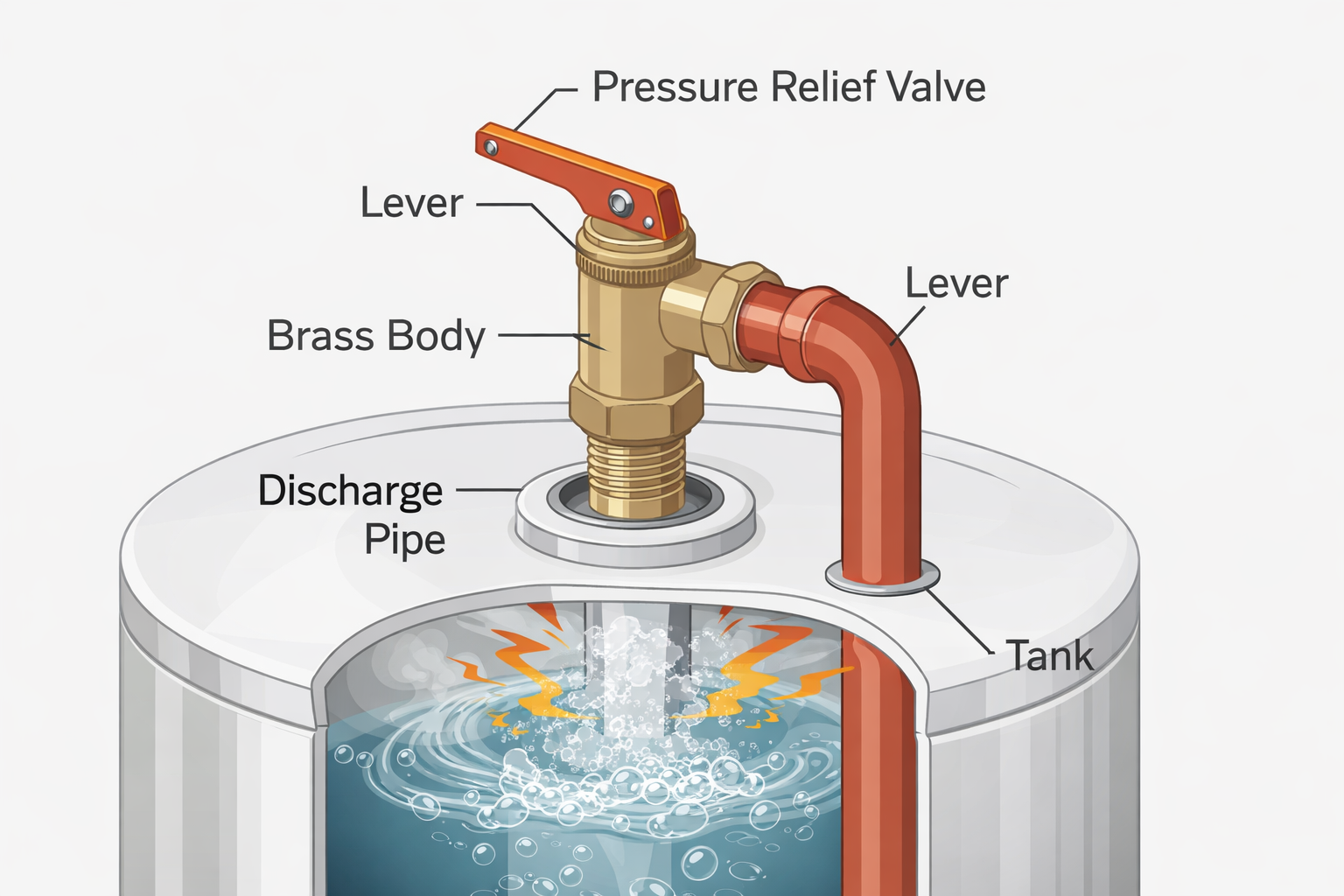
Water Heater Pressure Relief Valve Leaking: What It’s Actually Telling You
A pressure relief valve doesn’t leak randomly.
It opens on purpose—to release stress inside your system.
That means when water comes out of it, something behind the scenes is happening:
- pressure is rising
- temperature is pushing limits
- or the valve itself isn’t sealing anymore
👉 Your job isn’t just to stop the leak—it’s to understand what triggered it
Quick Answer (Optimized Snippet Block)
If your water heater pressure relief valve is leaking, the most common causes are thermal expansion (pressure buildup after heating), overheating water, or a worn valve. Occasional dripping after a heating cycle can be normal, but continuous leaking usually signals a problem that needs attention.
What To Do Right Now (If It’s Actively Leaking)
- check if water is extremely hot
- lower temperature setting to ~120°F
- place a container under discharge pipe
- avoid contact with hot water
- monitor if leak is constant or periodic
👉 Call a professional immediately if:
- water is discharging continuously or forcefully
- temperature feels dangerously high
- leak does not stop
What a Pressure Relief Valve Does (Simple but Important)
The T&P valve is your system’s last safety barrier.
It:
- releases excess pressure
- prevents overheating damage
- protects the tank from failure
👉 When it leaks, it’s reacting—not malfunctioning blindly
Is a Leaking Pressure Relief Valve Normal or a Problem?
Situation | Meaning | What to Do |
Small drip right after heating | normal thermal expansion | monitor |
Occasional light dripping | acceptable in some systems | observe |
Constant dripping | valve or system issue | diagnose |
Continuous or strong flow | unsafe condition | urgent action |
👉 Key distinction:
Short, occasional release = normal
Continuous leak = problem
How to Diagnose the Exact Cause (Step-by-Step)
Step 1 — Check water temperature
- very hot water → overheating issue
water-heater-too-hot
Step 2 — Observe leak timing
- only after heating → pressure expansion
- constant → valve likely worn
Step 3 — Look at leak intensity
- slow drip → minor issue
- strong flow → pressure/temperature risk
Step 4 — Consider system setup
- no expansion tank → pressure buildup likely
- older unit → valve wear likely
👉 This process isolates the real cause fast
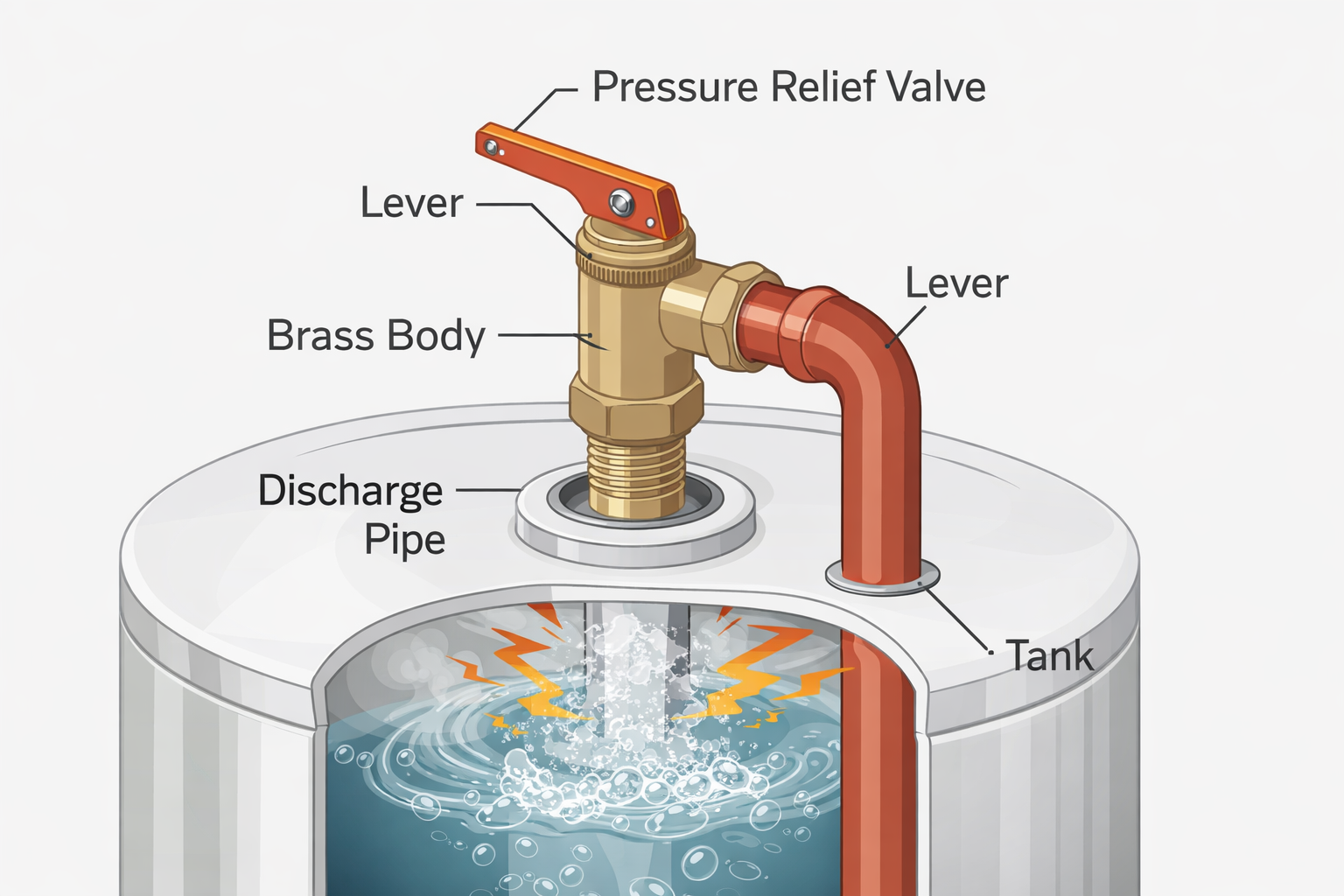
Thermal Expansion & Pressure Build-Up (Most Common Cause)
When water heats:
- it expands
- pressure increases
In closed systems:
- pressure has nowhere to go
- valve releases water
This is normal when:
- it happens briefly after heating
- stops on its own
This becomes a problem when:
- leak continues
- pressure builds excessively
Other Causes (Clearly Differentiated)
Overheating Water
- caused by thermostat issues
- results in high temperature + pressure
👉 safe-water-heater-temperature
Worn or Faulty Valve
- occurs after years of use
- valve no longer seals properly
Sediment or Debris
- blocks proper sealing
- causes slow, persistent leak
High Incoming Water Pressure
- external system pressure forces valve to open
Top Leak vs Valve Leak (Avoid Misdiagnosis)
Leak Location | Likely Cause |
valve pipe | pressure/temperature |
top fittings | plumbing connection |
tank body | tank failure |
How to Test the Valve Safely
⚠️ Only test if:
- system is stable
- water is not extremely hot
Steps:
- place container under pipe
- lift lever briefly
- release it
- observe if it reseals
Interpretation:
- reseals → working
- keeps leaking → valve likely faulty
Do NOT test if:
- overheating is suspected
- pressure discharge is strong
Fix Guide (Clear, Actionable Version)
If leak happens occasionally after heating
👉 no fix needed (normal expansion)
If leak is constant
👉 likely valve issue → replace valve
If water is too hot
👉 reduce thermostat setting
If pressure issue suspected
👉 check expansion setup
If unsure or conditions are unsafe
👉 call a professional
Repair Cost Breakdown (More Precise)
Fix Type | Typical Cost |
valve replacement | $150–$300 |
pressure-related repair | $200–$500 |
expansion tank install | $300–$800 |
full range | $150–$800 |
👉 water-heater-repair-cost
Repair vs Replace (Decision Guide)
Repair if:
- valve is the only issue
- system functions normally
Replace if:
- repeated pressure problems
- overheating persists
- unit is older
👉 water-heater-replacement-cost
Real-
World Scenarios (More Defined)
Normal case
Light drip after heating → no issue
Valve failure
Constant dripping → replace valve
System issue
Hot water + strong leak → investigate immediately
How to Prevent This in the Future
- keep temperature around 120°F
- monitor pressure behavior
- test valve yearly
- maintain system regularly
👉 water-heater-maintenance-schedule
Quick Decision Summary
- brief drip → normal
- constant leak → fix needed
- high heat → urgent
- unsure → inspect
Limitations
- plumbing systems vary
- pressure conditions differ
- component lifespan varies
FAQs
Is it normal for a pressure relief valve to leak?
Occasional dripping after heating can be normal, but continuous leaking indicates a problem.
How much does it cost to replace it?
Usually between $150 and $300.
Is it dangerous?
It can be if caused by pressure or overheating issues.
Can I fix it myself?
Basic replacement is possible, but diagnosis is key.