
Heat Pump Water Heater vs Electric: What Actually Makes Sense Long-Term?
Two systems.
Both use electricity.
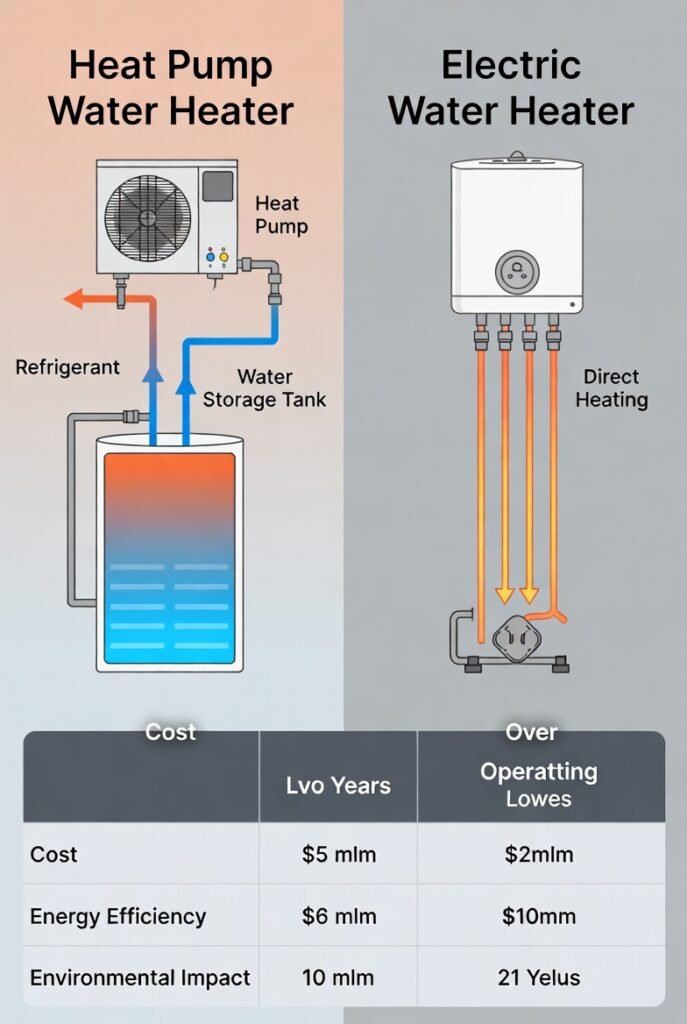
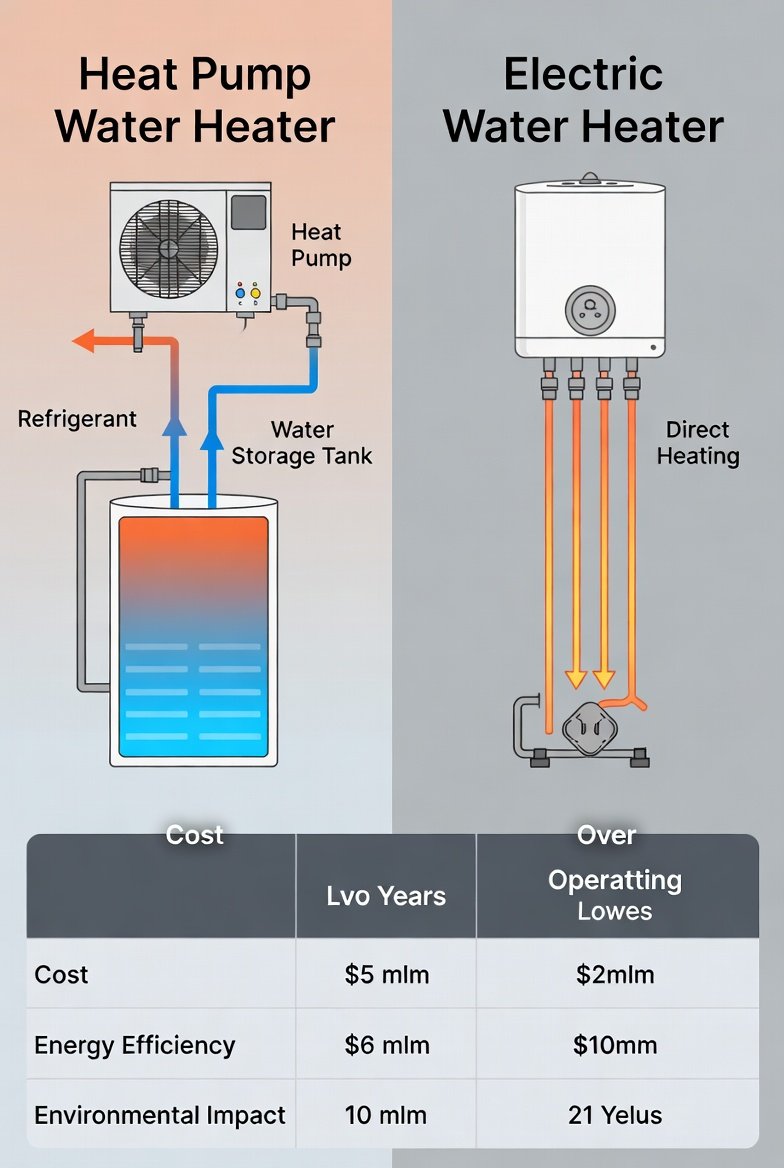
But one generates heat directly — and the other moves heat from the air.
That difference changes:
- Installation cost
- Operating cost
- Noise
- Recovery speed
- Climate performance
- Long-term ownership math
If you’re comparing options before replacement, the full context of water heater replacement cost may help — but this page focuses strictly on heat pump vs standard electric.
How Each System Actually Works
Standard Electric Water Heater
- Uses resistance heating elements
- Converts electricity directly into heat
- Heats water quickly
- Completely silent
- Mechanically simple
Efficiency: ~90–95%
Heat Pump Water Heater (Hybrid)
- Extracts heat from surrounding air
- Transfers that heat into the water tank
- Includes backup electric resistance elements
- Uses 60–75% less electricity in heat pump mode
Efficiency: 200–400% (Coefficient of Performance 2–4)
Important nuance:
Most hybrids have three operating modes:
- Heat Pump Only Mode (maximum efficiency, slower recovery)
- Hybrid Mode (heat pump + electric assist when needed)
- Electric Only Mode (acts like a standard electric tank)
This mode flexibility is often misunderstood — and it matters for large households.
For deeper cost anatomy, see heat pump water heater cost.
Upfront Cost Comparison
Standard Electric | Heat Pump | |
Unit Cost | $500 – $900 | $1,400 – $2,500 |
Installed Cost | $1,500 – $2,500 | $3,000 – $5,000 |
Federal Incentives | Rare | 30% tax credit (up to $2,000) |
Panel Upgrade Risk | Low | Moderate |
Heat pumps cost more initially.
But the gap narrows when tax credits apply.
Installation complexity is covered in detail in heat pump water heater installation cost.
Operating Cost Comparison (Real Numbers)
Standard electric systems are efficient — but they generate heat directly.
Heat pumps move heat — which requires far less electricity.
Example Using $0.14/kWh:
Standard Electric: ~$560/year
Heat Pump: ~$220/year
Savings: ~$340/year
Example Using $0.25/kWh:
Standard Electric: ~$1,000/year
Heat Pump: ~$400/year
Savings: ~$600/year
Higher electricity rates dramatically increase hybrid value.
10-Year Ownership Comparison
Standard Electric | Heat Pump | |
Install | $2,000 | $4,000 |
Tax Credit | $0 | -$1,200 |
Net Install | $2,000 | $2,800 |
10-Year Energy | $6,000 | $2,500 |
10-Year Total | $8,000 | $5,300 |
Most homeowners recover the upfront premium within 3–5 years.
After that, savings compound.
Recovery Speed (Hot Water Performance)
Standard electric heaters:
- Heat water faster
- Maintain strong recovery for large demand bursts
Heat pump heaters:
- Slower in pure heat pump mode
- Hybrid mode activates electric element during heavy demand
For families of 4–6 people, properly sized hybrids perform well.
For very high-demand households, recovery speed deserves attention.
Climate & Placement Impact
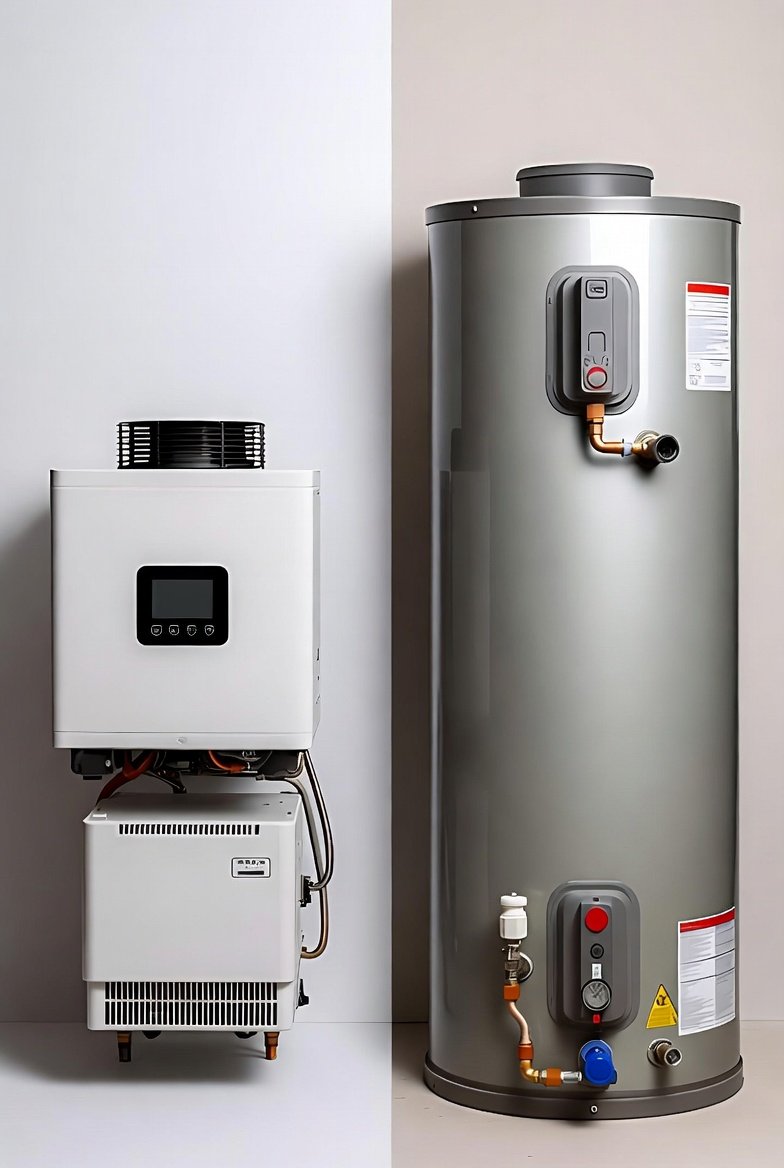
Heat pump water heaters require air volume and operate best in moderate climates.
Placement | Electric | Heat Pump |
Garage (mild climate) | Excellent | Excellent |
Basement (moderate temp) | Excellent | Very Good |
Cold unconditioned basement | Excellent | Reduced efficiency |
Tight interior closet | Excellent | Often unsuitable |
Heat pumps require ~700–1,000 cubic feet of air.
In very cold climates, efficiency drops below ~40°F.
Noise Comparison
Standard Electric:
- Silent
Heat Pump:
- 45–60 decibels
- Comparable to refrigerator hum
Garage placement minimizes impact.
Interior closet installation may cause disruption.
Electrical Panel Considerations
Standard electric:
- Typically integrates with existing wiring
- Minimal load complications
Heat pump:
- Dedicated 240V circuit
- May require breaker expansion
- Can conflict with EV chargers or other high-load appliances
Panel upgrades can add $1,000–$3,000.
Maintenance & Service Cost Comparison
Standard electric:
- Occasional element replacement
- Minimal routine maintenance
- Service visit: $150–$300
Heat pump:
- Clean air filter every few months
- Inspect condensate drain
- More moving parts
- Service visit: $200–$400
Hybrid systems are more complex but often reduce heating element wear.
For lifespan planning, see water heater lifespan years.
Household Fit Analysis
1–2 Person Household
Heat pump almost always wins long-term.
3–4 Person Household
Hybrid mode performs well when properly sized.
5+ Person Household
Sizing and recovery mode become critical.
Standard electric may feel more responsive.
When Heat Pump Is NOT Ideal
- Tight interior closet
- No condensate drainage path
- Panel fully loaded
- Extremely cold unconditioned install space
- Planning to sell within 2–3 years
- Very low electricity rates
When Standard Electric Makes Sense
- Lowest upfront cost priority
- Simple installation environment
- Short-term ownership
- Limited mechanical space
When Heat Pump Makes the Most Sense
- 5+ year ownership horizon
- High electricity rates
- Available garage or basement space
- Eligibility for tax credits
- Focus on long-term savings
Final Decision Matrix
- Best overall long-term value: Heat pump water heater
- Best for lowest upfront cost: Standard electric
- Best for high electricity rates: Heat pump
- Best for tight install space: Standard electric
- Best for long-term ownership (5+ years): Heat pump
This is not about “better.”
It’s about alignment with your home and timeline.