
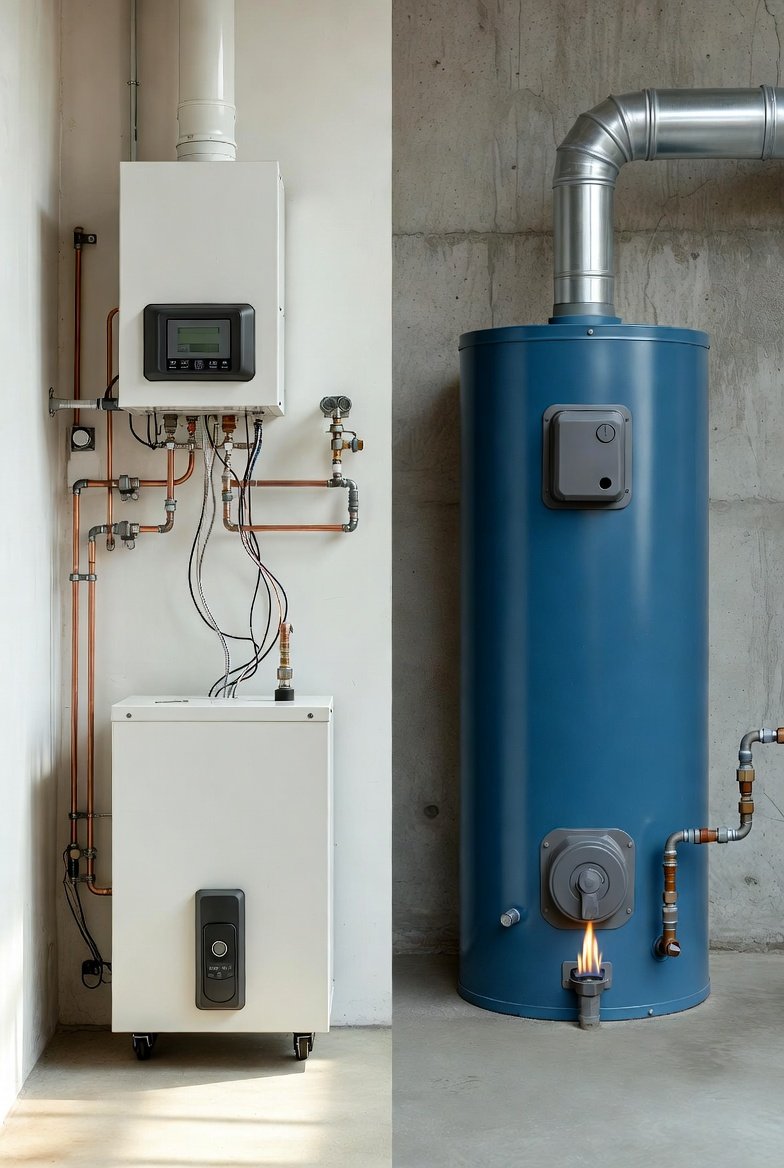
Heat Pump Water Heater vs Gas: A Contractor-Level Comparison
If you’re choosing between a heat pump water heater and a gas model, the decision isn’t about which technology is “better.”
It’s about:
- Your climate
- Your electrical panel capacity
- Whether you already have gas infrastructure
- Your electric and gas rates
- Your household’s actual hot water demand
This guide breaks the decision into installation anatomy, energy modeling, recovery performance, climate impact, and 10-year ownership — the areas most comparison pages oversimplify.
Installation Reality Check (Before Efficiency Even Matters)
Most homeowners jump straight to operating cost. Contractors start with feasibility.
Heat Pump Feasibility Checklist
- 240V dedicated circuit required
- Typically 30A breaker
- Panel capacity must support load
- If your 100A panel is near max, upgrade may cost $1,000 – $3,000
- Needs ~700–1,000 cubic feet of surrounding air volume
- Requires condensate drainage
- Produces 45–60 dB sound (similar to a dishwasher)
If your mechanical room is tight or your panel is already loaded, that alone may eliminate the option.
For a deeper breakdown of what drives installation cost, see:
👉 water installation cost
Gas Feasibility Checklist
- Gas line sized for BTU demand
- Venting required:
- Atmospheric (B-vent)
- Power vent
- Direct vent
- Combustion air clearance
- Electrical outlet for power-vent models
If your home already has gas service and venting in place, installation is often straightforward.
If venting must be added or rerouted, costs increase quickly.
Code considerations and placement rules are covered here:
👉 water heater code requirement
How Each System Actually Works
Heat Pump Water Heater
Instead of creating heat directly, a heat pump water heater moves heat from surrounding air into the tank using a refrigeration cycle.
- Typical COP: 2.5–3.5
- Includes backup resistance elements
- Switches to hybrid mode under heavy demand
During back-to-back usage, resistance elements may activate — reducing efficiency advantage temporarily.
Gas Water Heater
Gas units burn natural gas or propane to generate combustion heat.
- Faster recovery
- Higher first-hour rating
- Output not affected by room temperature
Condensing gas models improve efficiency but require PVC venting and condensate management.
Upfront Cost Breakdown
Heat Pump Installed
- Equipment: $1,500 – $2,800
- Labor: $800 – $1,500
- Electrical modifications: variable
- Possible panel upgrade: $1,000 – $3,000
Typical installed total: $3,000 – $5,000
Federal tax credit:
30% up to $2,000 annually for qualifying heat pump water heaters
Net installed cost often lands near $2,500–$3,500 after credit.
Full pricing breakdown:
👉heat pump water heater cost
Gas Installed
- Equipment: $600 – $1,500
- Labor: $800 – $1,500
- Venting changes: variable
Installed range: $1,800 – $3,500
Power vent or new vent chase pushes toward upper range.
Energy Cost Modeling (Transparent Assumptions)
Assumptions:
- Moderate household use
- Standard tank size
- Stable inlet temperature
Scenario A — $0.14/kWh
Heat pump annual estimate: ~$180–$260
Gas annual estimate: ~$300–$420
Heat pump wins clearly.
Scenario B — $0.25/kWh
Heat pump annual estimate: ~$350–$480
Gas annual estimate: ~$300–$420
Gap narrows significantly.
Electric rate is the pivot variable.
More detailed fuel cost modeling:
👉 gas vs electric water heater cost
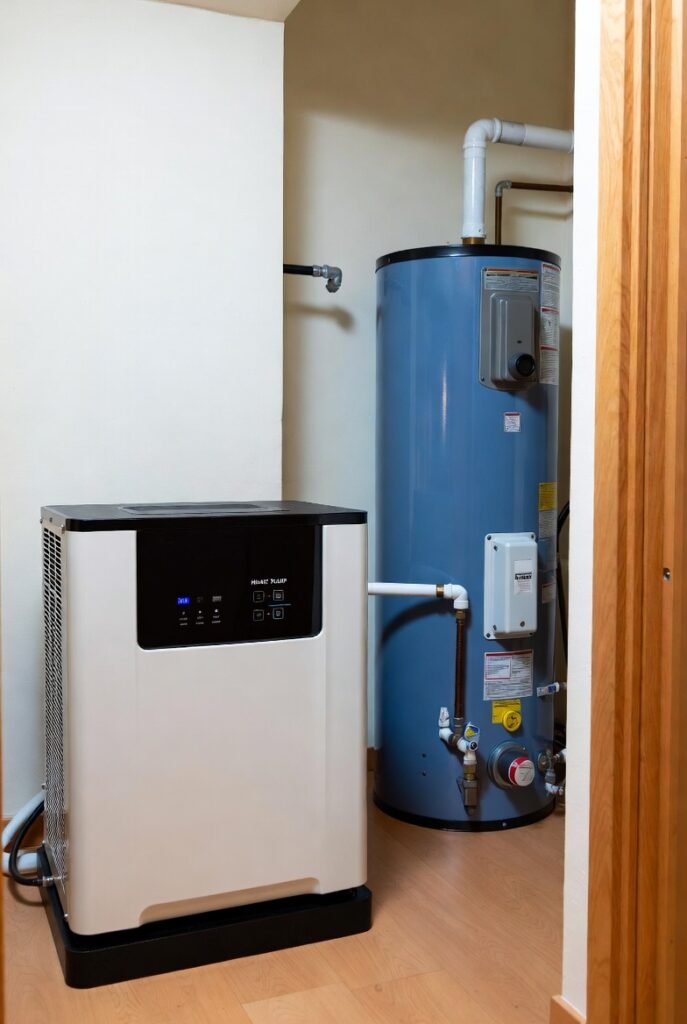
Climate Performance Nuance
Heat pump performance drops in colder environments.
In northern basements:
- Efficiency declines
- Unit cools room further
- Hybrid mode activates more frequently
Gas performance is not affected by ambient air temperature.
Recovery Under Real Household Load
Gas:
- Faster recovery
- Handles multiple simultaneous draws better
Heat pump:
- Slower in pure heat pump mode
- Hybrid mode activates during heavy demand
If your household routinely runs:
- Two showers
- Laundry
- Dishwasher
Gas often delivers more consistent recovery.
Noise & Placement Considerations
Heat Pump:
- 45–60 dB operating noise
- Cools surrounding air
- Best placed in garage or large basement
Gas:
- Very quiet
- Smaller installation footprint
10-Year Ownership Modeling
Moderate electric rate example
Heat Pump:
- Installed: $4,000
- Tax credit: -$1,500
- Net: $2,500
- Avg annual energy: ~$220
10-year total ≈ $4,700
Gas:
- Installed: $2,500
- Avg annual energy: ~$350
10-year total ≈ $6,000
At higher electric rates, difference compresses.
Expected lifespan comparison:
When Heat Pump Is NOT Worth It
- Tight mechanical closet
- Electrical panel at capacity
- High electricity rates
- Cold northern basement
- Large high-demand household
When Gas Is NOT Worth It
- No existing gas service
- Venting must be built from scratch
- Mild climate with moderate electric rates
- Strong federal incentives available
Decision Matrix
Situation | Best Fit |
Mild climate + moderate electric rates | Heat Pump |
Cold northern basement | Gas |
Large family, heavy usage | Gas |
No gas line installed | Heat Pump |
Tight mechanical closet | Gas |
Energy-cost stability priority | Heat Pump |
Contractor Verdict
Best overall for long-term operating savings in moderate climates: Heat pump water heater.
Best for cold climates or high-demand households: Gas water heater.
Best where electric rates are high and gas infrastructure already exists: Gas.
The right decision depends on mechanical fit, climate, and utility pricing — not marketing claims.