
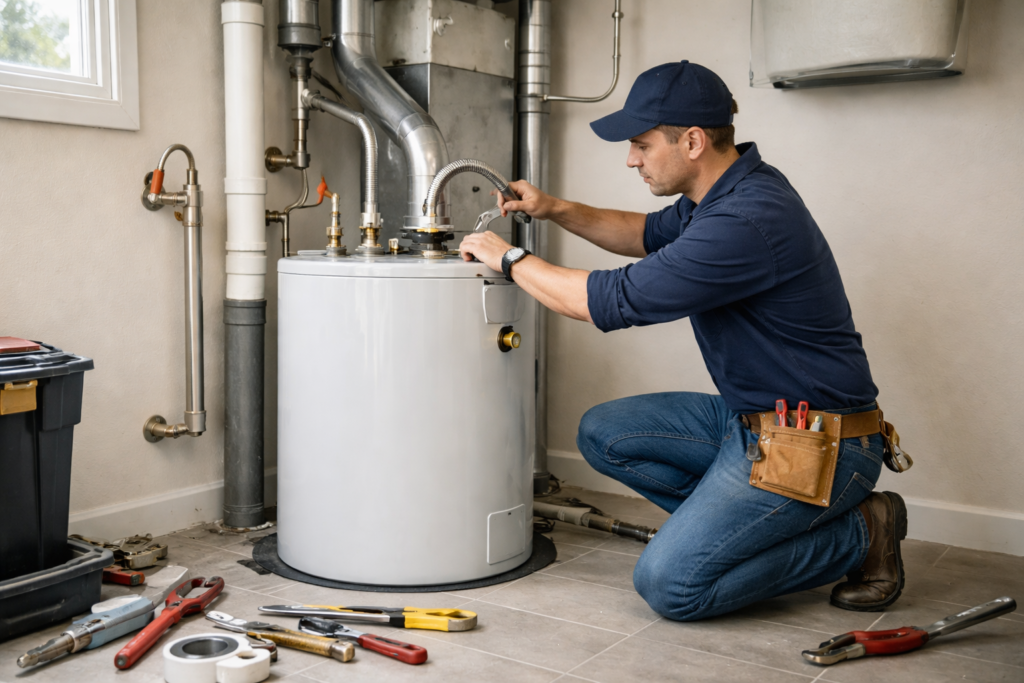
Water Heater Making Noise: What Each Sound Means (Fix or Replace?)
A water heater does not become noisy without reason.
Every sound is a signal.
Some indicate normal operation.
Some point to maintenance issues.
And a few signal pressure, overheating, or system imbalance that should not be ignored.
If you understand what the sound means, the decision becomes simple.
Where Is the Noise Coming From? (Start Here)
Before diagnosing the sound, identify the source:
- Tank → sediment or heating issue
- Pipes → expansion or water hammer
- Valve → pressure imbalance
- System-wide → airflow, circulation, or mounting
Misidentifying the source leads to the wrong fix. In many cases, what sounds like a heater issue is actually tied to performance problems explained in water heater not heating properly, especially when heat output is inconsistent.
Quick Sound Decoder (Severity + Action)
Sound | Root Cause | Severity | Action |
Popping | Light sediment | 🟡 Needs attention | Flush tank |
Rumbling | Heavy sediment / overheating | 🔴 Urgent | Flush or replace |
Hissing / Sizzling | Scale or overheating | 🟡 Needs attention | Inspect |
Banging | Water hammer / pipes | 🟡 Needs attention | Fix plumbing |
Humming / Vibration | Loose components | 🟢 Safe | Stabilize |
Valve noise | Pressure imbalance | 🔴 Urgent | System fix |
If the noise is paired with poor heating performance, it typically connects to deeper system inefficiencies covered in water heater not heating properly, which helps confirm whether this is still a maintenance issue or something more serious.
What This Noise Could Cost You
Issue Type | Typical Cost |
Sediment (light) | $100–$300 |
Heavy buildup | $150–$600 |
Water hammer | $150–$500 |
Pressure valve issue | $200–$600 |
Full replacement | $800–$2,500+ |
Early action keeps you in the lower cost range. Once sediment hardens or pressure issues develop, the situation often shifts toward scenarios outlined in water heater replacement cost, where repair is no longer the efficient option.
The Most Common Cause: Sediment (Popping → Rumbling)
This is the starting point in most cases.
Mineral buildup forms at the bottom of the tank.
Heat pushes water through it—creating popping or rumbling.
What it leads to
- reduced efficiency
- overheating at the base
- internal stress
Progression
- light crackling → 🟢
- popping → 🟡
- rumbling → 🔴
What to do
- flush immediately at early stages
- if already rumbling, damage may be advanced
When sediment buildup reaches the rumbling stage and starts affecting performance, it often overlaps with symptoms discussed in water heater leaking from bottom, especially if internal stress has already started compromising the tank.
Sizzling or Hissing (Electric vs Gas Difference)
Electric units
- scale buildup on elements
- uneven heating
- gradual performance drop
Gas units
- condensation or localized overheating
Severity
🟡 Needs attention → if persistent
🔴 Urgent → if paired with performance issues
If heating output is inconsistent alongside hissing, this usually aligns with problems covered in water heater not heating properly, indicating element or efficiency issues.
Banging or Knocking (Pipe Problem, Not Tank)
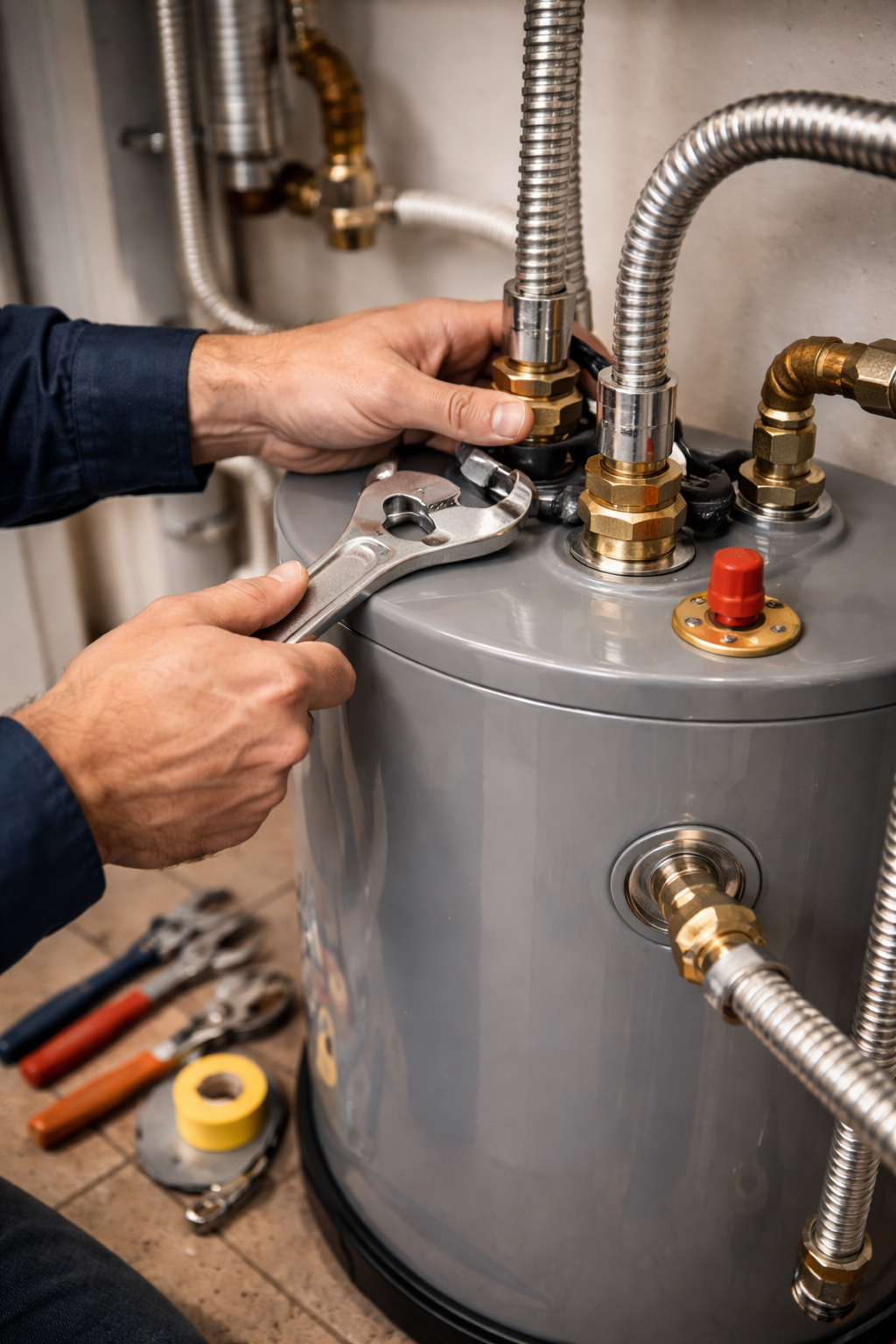
This is commonly misdiagnosed.
Cause
- water hammer
- pipe expansion
- loose supports
Severity
🟡 Needs attention
Why it matters
This can:
- damage joints
- stress valves
- create long-term wear
Fix
- install arrestor
- secure piping
- adjust pressure
In some setups, persistent pressure-related banging also connects to the same system imbalance that leads homeowners toward decisions outlined in water heater repair vs replace, especially when multiple symptoms appear together.
Humming or Vibration (Low Risk, Long-Term Impact)
This is mechanical, not internal.
Causes
- loose elements
- pipes touching structure
- mounting issues
- recirculation vibration
Severity
🟢 Safe initially
🟡 Needs attention if persistent
Fix
- tighten
- isolate
- stabilize
While not immediately dangerous, ignoring vibration can accelerate wear, eventually leading to the kind of long-term cost scenarios explained in water heater replacement cost.
Relief Valve Noise (Pressure Problem — High Risk)
This is not maintenance.
This is system imbalance.
Cause
Thermal expansion in a closed system.
What happens
Pressure builds → valve releases → noise + discharge
Severity
🔴 Urgent
Why it matters
This can:
- damage internal components
- shorten system lifespan
- become a safety issue if ignored
When pressure imbalance becomes persistent, the decision often shifts toward options explained in water heater repair vs replace, especially if the unit is older.
🚨 Do NOT Ignore These Sounds
🔴 Constant valve discharge
🔴 Loud banging with pressure spikes
🔴 Sudden change in noise pattern
🔴 Noise + overheating
These indicate system stress or failure risk. In these cases, waiting often increases cost and pushes the situation toward full replacement scenarios.
Water Heater Age Guide (Fix vs Replace Filter)
Age | Decision |
0–5 years | Repair is usually worth it |
6–10 years | Depends on severity |
10+ years | Noise often signals end of lifespan |
Once a unit crosses the 10-year mark and noise persists, it typically aligns with replacement scenarios detailed in water heater replacement cost, rather than repair.
Top Inspection Failures (When Noise Exists)
Rank | Issue | Meaning | Cost |
1 | Heavy sediment | Tank aging fast | $150–$400 |
2 | Pressure imbalance | System stress | $200–$600 |
3 | Water hammer | Plumbing issue | $150–$500 |
4 | Loose piping | Install flaw | $100–$300 |
5 | Element scaling | Efficiency loss | $200–$400 |
After Fixing the Issue, Check This
- Noise gone → resolved
- Noise reduced → partial fix
- Noise returns → deeper issue
- Performance still poor → system-level problem
If noise persists after fixes, it usually confirms you’re moving toward the decision zone explained in water heater repair vs replace.
When Flushing Will NOT Fix It
Flushing only solves sediment.
It will NOT fix:
- pressure imbalance
- pipe-related noise
- damaged elements
- aging tanks
If flushing doesn’t resolve the issue, the situation often transitions into full replacement territory as outlined in water heater replacement cost.
Decision Path (Clear Action Flow)
- If noise is light → monitor
- If repeating → flush
- If performance drops → service
- If pressure involved → system fix
- If noise persists → replace
Final Word
Water heater failure rarely starts with a leak.
It starts with noise.
If the sound is new, increasing, or tied to performance issues:
do not ignore it.