
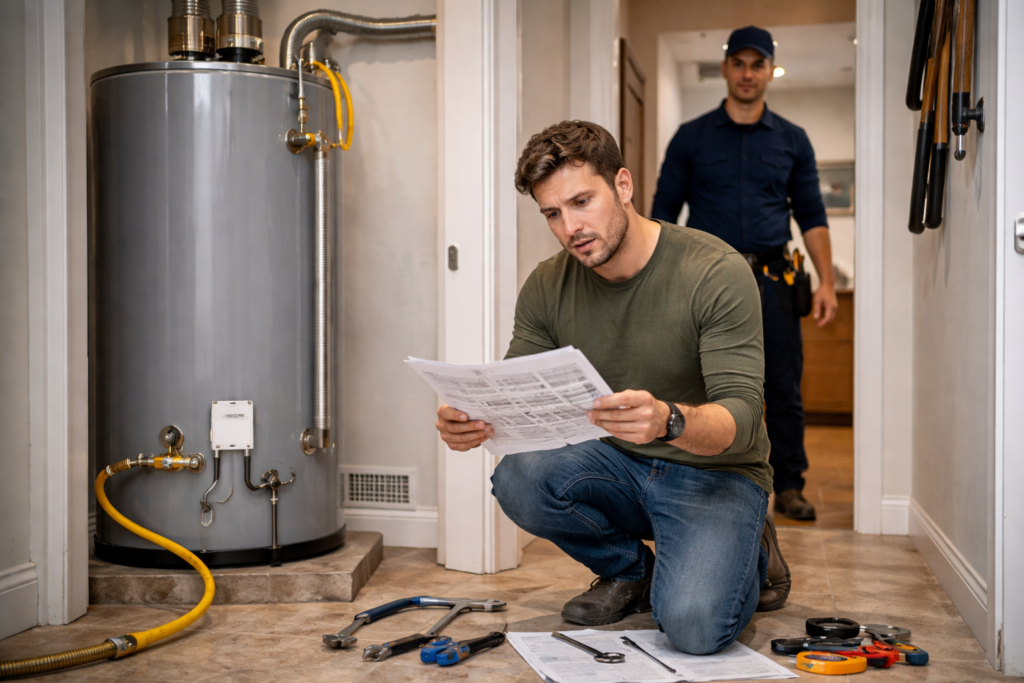
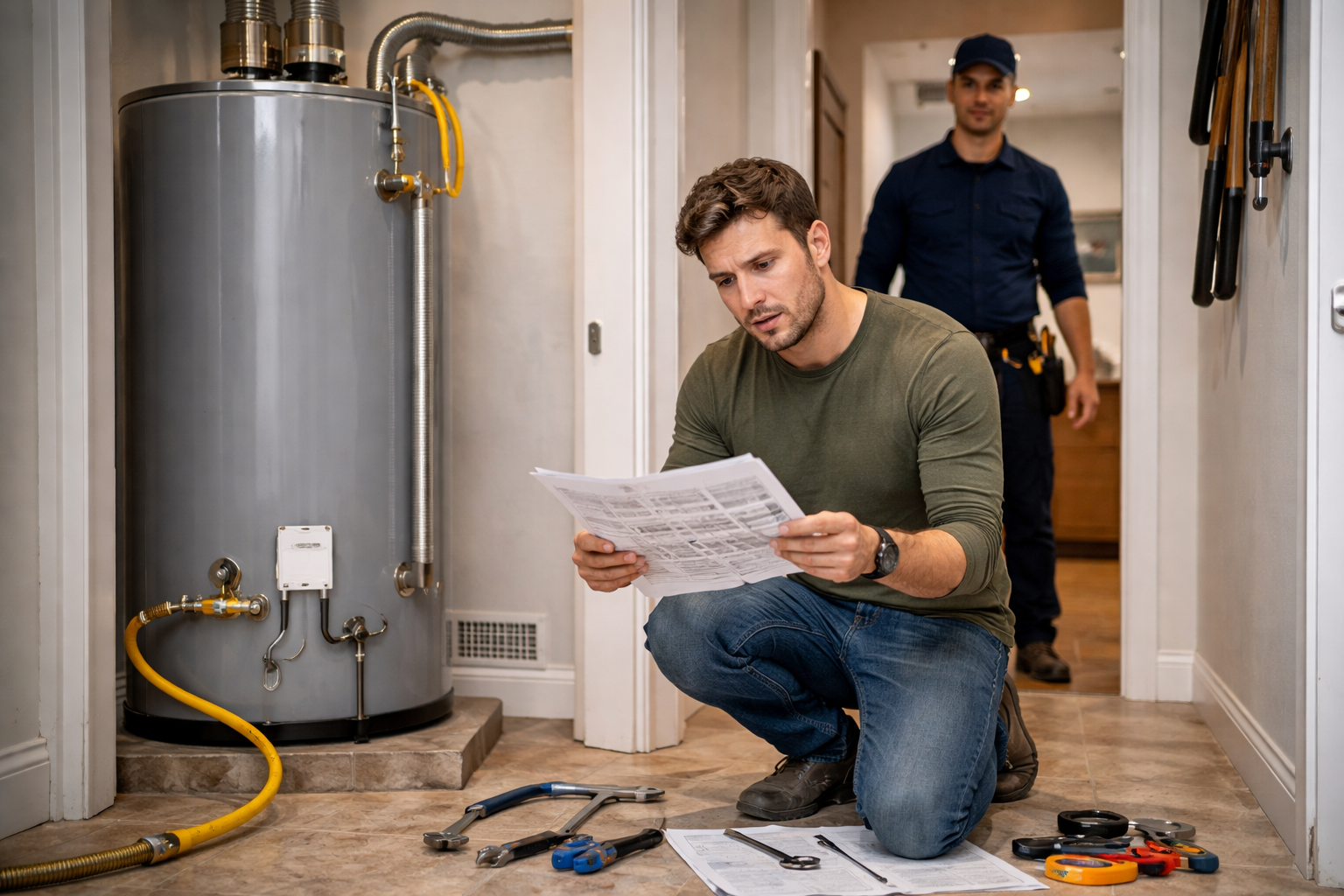
Can You Install a Water Heater Yourself? What’s Safe, What’s Risky, and When to Stop
You might think installing a water heater is just a few pipes and a tank.
That’s how it looks.
But one wrong connection, one missed valve, or one improper vent—and suddenly you’re dealing with:
- a flooded basement
- electrical damage
- or worse, a gas leak
This is one of those jobs where confidence can cost more than inexperience.
And the real question isn’t:
“Can you do it?”
It’s:
“Should you?”
🔎 Quick Answer (Featured Snippet)
Can you install a water heater yourself?
Yes—in limited cases. A simple electric replacement may be manageable for experienced DIYers. However, gas systems, tankless units, or new installations involve safety risks and code requirements that typically make professional installation the safer choice.
⚖️ DIY vs Pro (Instant Reality Check)
Scenario | DIY? | Risk Level |
Electric replacement (same setup) | 🟡 Possible | Medium |
Gas water heater | 🔴 No | High |
Tankless system | 🔴 No | Very High |
New install (no hookups) | 🔴 No | Extreme |
Why This Job Tricks So Many People
It feels simple because:
- the system is visible
- connections seem straightforward
- tutorials make it look quick
But what you don’t see:
- ⚡ electrical load balancing
- 🔥 gas combustion safety
- 💧 pressure regulation
- 📋 local code compliance
That gap is where most DIY failures happen.
⚠️ What Actually Makes Installation Complex
⚡ Electrical (Hidden Load Risk)
Electric heaters require:
- correct amperage compatibility
- proper breaker sizing
- safe grounding
A mismatch here can lead to:
- breaker trips
- overheating
- long-term damage
🔥 Gas Systems (High-Risk Zone)
Gas units introduce:
- combustion safety
- venting requirements
- carbon monoxide risk
Improper venting is one of the most common failure points.
💧 Pressure & Safety Valves
Every system relies on:
- T&P (temperature & pressure) valve
- proper discharge routing
Missing or misplacing this = serious hazard.
📋 Code & Compliance
Many areas require:
- permits
- inspections
- approved installation standards
Skipping this can:
- void insurance
- fail inspection
- create resale problems
💰 Cost vs Risk (The Real Decision Layer)
Scenario | DIY Cost | Pro Cost | Failure Risk |
Electric replacement | $100–$300 | $800–$1,500 | Moderate |
Gas installation | $200–$500 | $1,200–$2,500 | High |
Tankless install | $500–$1,500 | $2,500–$5,000+ | Very High |
Yes—you can save money upfront.
But if something goes wrong, you’re no longer saving—you’re compounding cost.
For full cost breakdowns, see: water-heater-replacement-cost
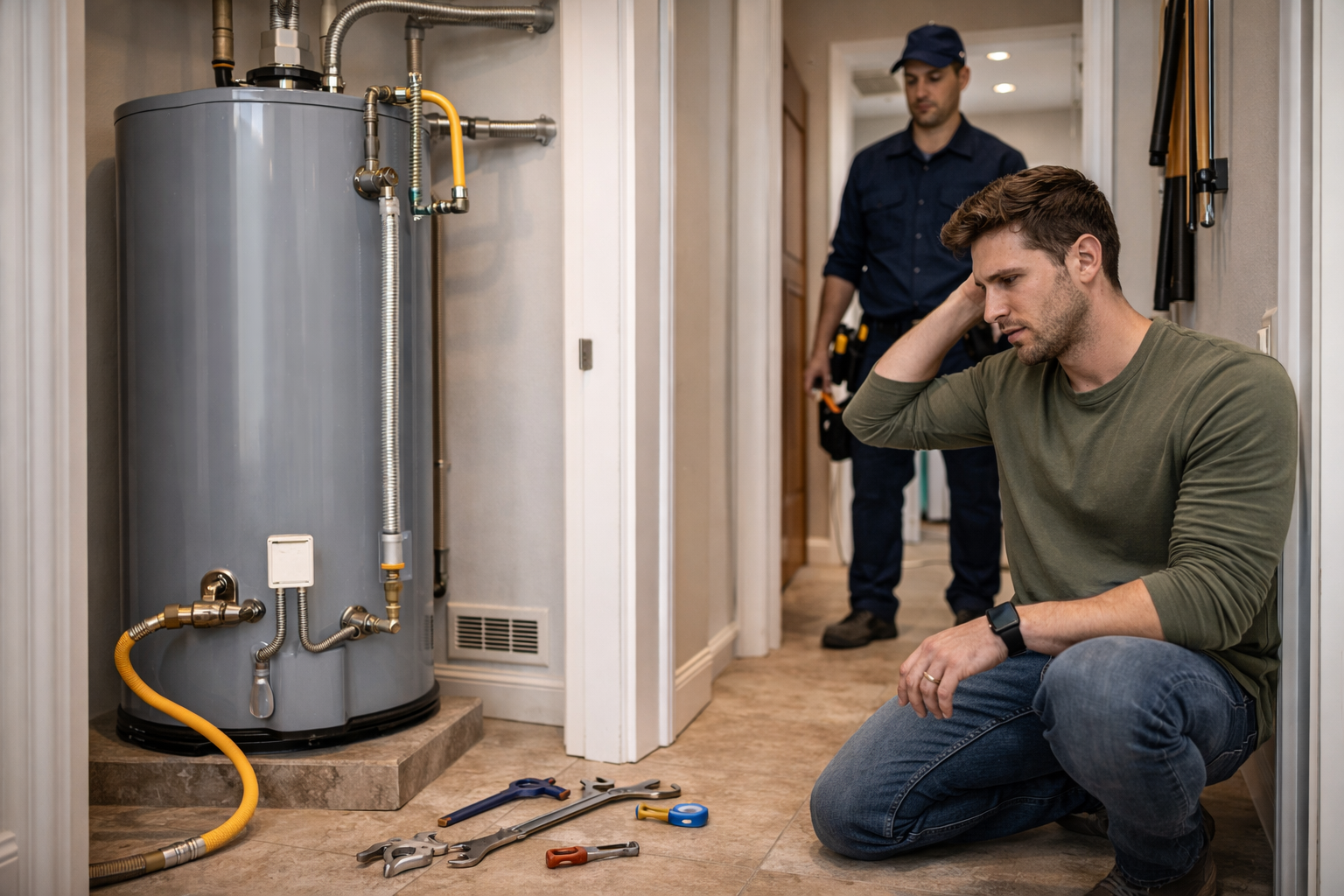
🧠 When DIY Installation Is Actually Reasonable
DIY may make sense if ALL of these are true:
- electric heater (not gas)
- direct replacement (same type, same connections)
- no plumbing or wiring modifications needed
- you understand basic installation principles
- no permit or inspection complications
Even then, it’s not easy—just controlled risk.
🚨 HARD STOP — Do NOT DIY in These Cases
Stop immediately if:
- 🔥 gas heater involved
- 🌬 venting required
- ⚡ electrical uncertainty
- 🧱 new installation (no existing setup)
- 📋 code requirements unclear
- 💧 existing system had pressure or leak issues
At this point, DIY is no longer a “cost-saving move.”
It becomes a risk multiplier.
🔧 What Most DIY Guides Don’t Tell You
💧 Leaks Don’t Show Immediately
A small mistake can take weeks to appear—and by then, damage is already done.
⚡ Systems Can “Work” but Be Wrong
Improper installs may:
- reduce efficiency
- shorten lifespan
- increase energy cost
🔥 Gas Risks Are Not Always Obvious
Improper venting may not fail instantly—but becomes dangerous over time.
📋 Insurance & Liability Issues
Unpermitted work can:
- void claims
- create legal exposure
⏱️ Time Reality (Not a Weekend Job)
What people expect:
👉 1–2 hours
Reality:
👉 4–8+ hours
👉 unexpected delays
👉 troubleshooting
Common problems:
- fittings don’t match
- valves stuck
- pressure imbalance
📋 Code & Permit Reality
Depending on location:
- permits may be required
- inspection may be mandatory
- installation must meet local code
Failing this can impact:
- resale
- insurance
- safety compliance
⚖️ DIY vs Pro Decision Framework
Ask yourself honestly:
1. What type of system?
- Electric → maybe
- Gas → stop
2. Is it a direct replacement?
- Yes → manageable
- No → high risk
3. Do you fully understand the system?
- Yes → proceed carefully
- No → don’t attempt
4. Can you afford failure?
- Minor cost → maybe
- Major risk → not worth it
📉 The Hidden Trade-Off Nobody Talks About
Saving:
👉 $300–$800
Risking:
👉 $2,000–$5,000+ in damage or replacement
That’s the real equation.
For deeper decision comparison: water-heater-repair-vs-replace
🧩 Edge Cases Most People Miss
New Water Heater Still Smells or Acts Odd
New systems can:
- react with anode rod
- produce temporary odor
One Faucet Only Has Issues
Likely not heater—check plumbing lines.
Well Water vs City Water
Well systems:
- more prone to chemical reactions
- higher maintenance requirements
Older Homes
Older systems may have:
- incompatible piping
- outdated wiring
🧠 Final Word (The Honest Answer)
Yes—you can install a water heater yourself.
But only in controlled, low-risk scenarios.
If it involves:
- gas
- new installation
- unknown variables
That’s where DIY ends.
And the smartest move is knowing where that line is.