
Water Heater Leaking: What It Means, What To Do Immediately, and How Serious It Really Is
A small drip from your water heater can turn into thousands of dollars in damage overnight.
What starts as a minor leak can quickly lead to:
- soaked flooring
- mold growth behind walls
- electrical hazards
- full tank failure
And the real problem?
👉 Most homeowners wait too long, assuming it’s minor.
But in many cases, a leak is not just a repair issue—it’s a failure warning.
🚨 What To Do Right Now (Emergency Action Box)
If your water heater is leaking:
- Shut off power (electric) or gas supply immediately if leak is active
- Turn off cold water supply valve to the heater
- Avoid using hot water until diagnosed
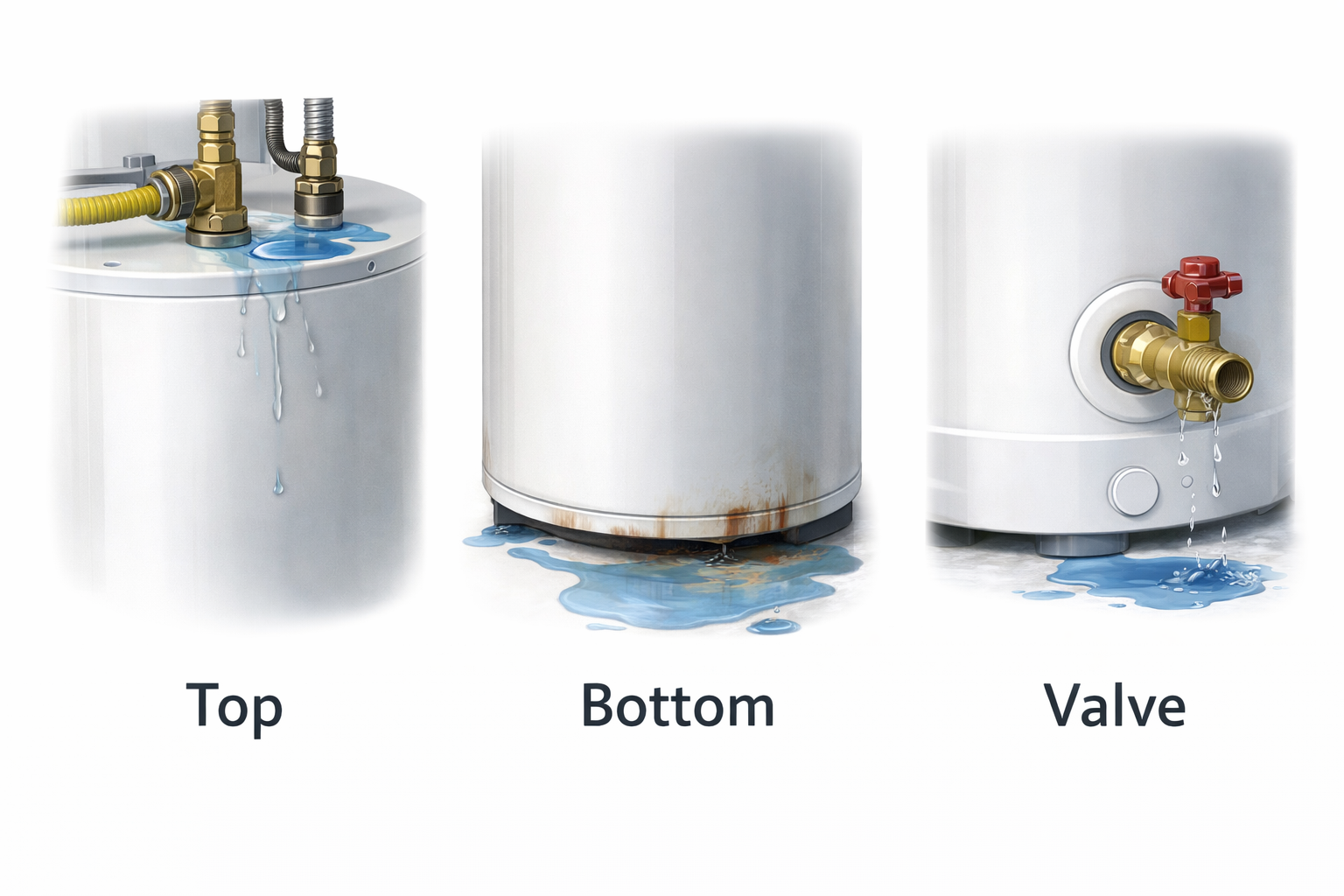
- Check leak location (top, bottom, valve)
- Contain water to prevent structural damage
- Call a professional if leak is increasing or unclear
👉 Acting fast can prevent $1,000–$10,000+ damage scenarios
Quick Answer (Featured Snippet — Upgraded)
If your water heater is leaking, it’s usually caused by:
- loose or worn connections
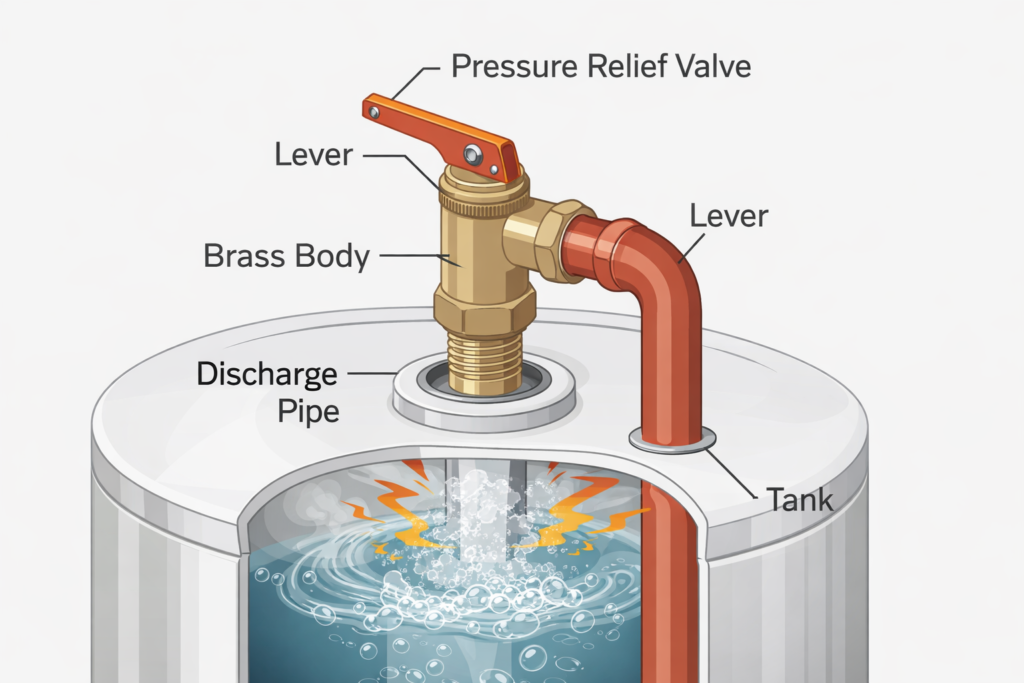
- pressure relief valve discharge
- drain valve failure
- internal tank corrosion (most serious)
- excessive pressure or overheating
👉 The location of the leak determines severity and next step
Should You Turn Off a Leaking Water Heater? (Critical Section)
👉 YES — in most cases
Turn it OFF immediately if:
- water is actively pooling
- leak is increasing
- coming from bottom of tank
- temperature/pressure seems abnormal
You may monitor briefly if:
- slow drip from a connection
- no pressure or overheating signs
👉 Rule:
If you’re unsure → turn it off.
It’s safer than risking escalation.
Where Is the Leak Coming From? (Core Diagnosis System)
Leak Location | What It Means | Severity |
Top | loose pipe / connection | Low–Medium |
Side | valve or fitting issue | Medium |
Bottom | internal tank failure | HIGH |
Pressure valve | pressure problem | Medium–High |
Drain valve | worn or loose valve | Low–Medium |
👉 Bottom leaks almost always mean replacement
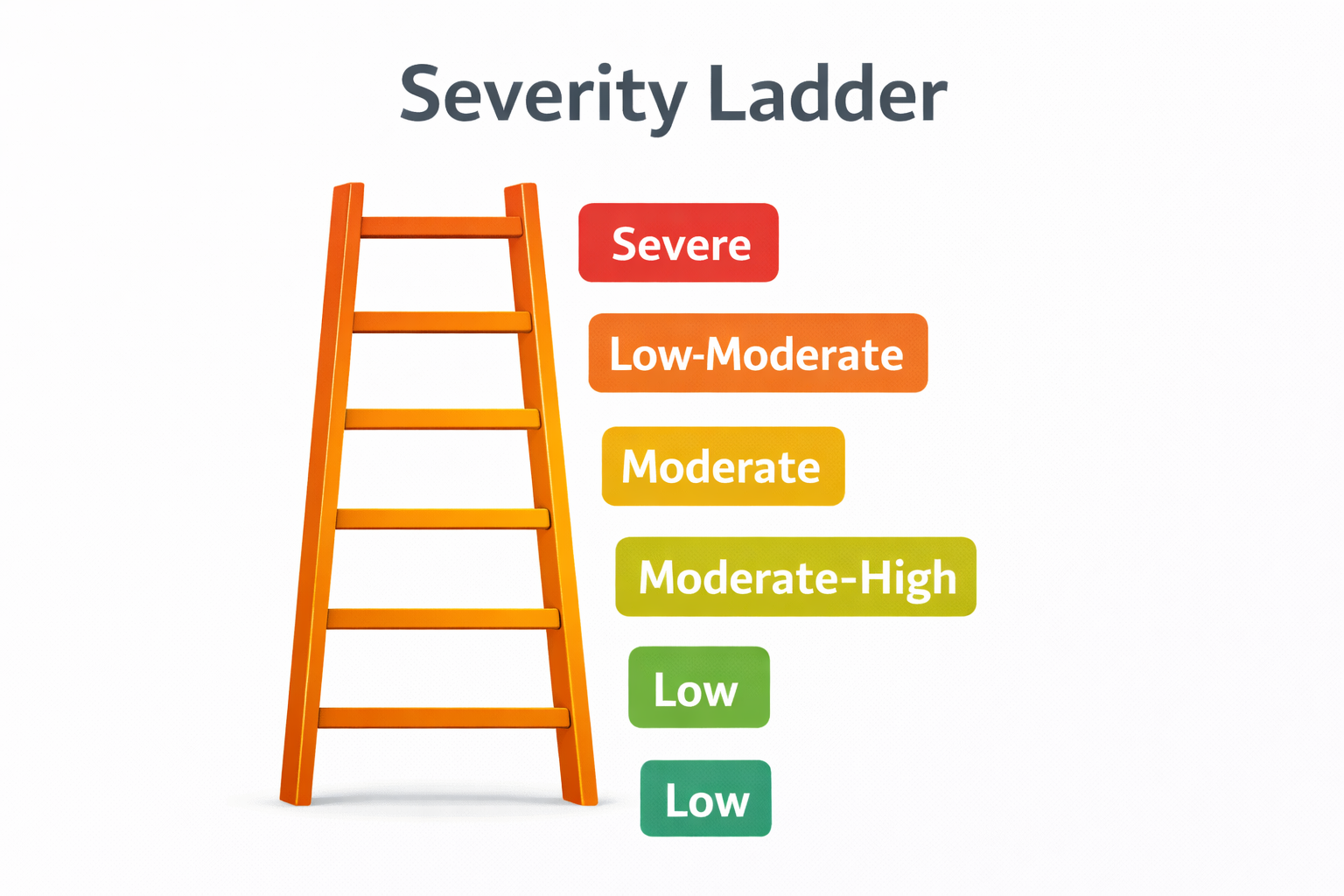
Leak Severity Decision Ladder (SERP Advantage Section)
Level | Situation | Action |
Minor drip | slow leak | monitor & repair |
Steady leak | visible flow | repair soon |
Pooling water | spreading damage | urgent repair |
Tank leak | structural failure | replace immediately |
What Each Leak Location Actually Means
Top Leak (Most Common & Fixable)
- loose fittings
- worn connections
👉 Usually repairable
Bottom Leak (Most Serious)
- internal corrosion
- tank failure
👉 Not repairable → replacement needed
👉 water-heater-leaking-from-bottom
Pressure Relief Valve Leak
- excess pressure
- overheating
- valve malfunction
👉 water-heater-pressure-relief-valve-leaking
Drain Valve Leak
- worn threads
- loose valve
👉 typically repairable
Pipe or Connection Leak
- aging pipes
- installation issues
Why Water Heaters Start Leaking (Deeper Explanation)
Leaks don’t just happen randomly.
1. Pressure buildup
Excess pressure forces water out through valves or weak points
2. Sediment damage
Buildup weakens the tank and causes internal corrosion
3. Aging system
Most tanks fail as they approach end of lifespan
4. Component failure
Valves, seals, and fittings wear over time
What Happens If You Ignore a Leak? (High-Impact Section)
Ignoring a leak can lead to:
- water damage: $500–$5,000+
- mold growth
- structural weakening
- complete tank rupture
👉 Small leak → big problem fast
Step-by-Step Leak Troubleshooting
Step 1 — Identify location
Top / bottom / valve
Step 2 — Inspect connections
Tighten if clearly loose
Step 3 — Evaluate severity
Use decision ladder
Step 4 — Check tank condition
Bottom leak = failure
Step 5 — Decide next move
Repair or replace
Repair Cost (What You’re Likely Facing)
Issue | Cost |
Minor fix | $100–$200 |
Valve repair | $150–$300 |
Pressure valve | $150–$350 |
Overall repair range | $150–$750 |
Repair or Replace? (Decision Guide)
Repair if:
- leak is from valve or connection
- unit is relatively new
Replace if:
- leak is from tank
- corrosion present
- repeated issues
👉 water-heater-replacement-cost
Is This a Sign Your Water Heater Is Dying?
Yes—especially if:
- unit is 8–12+ years old
- corrosion is visible
- leaks are recurring
👉 These are classic end-of-life indicators
Real-World Scenarios
Small top leak
→ simple repair
Bottom leak
→ replacement required
Valve leak
→ moderate repair
Common Mistakes to Avoid
- ignoring early leaks
- delaying shut-off
- assuming all leaks are fixable
- skipping maintenance
👉 water-heater-maintenance-schedule
Quick Decision Summary
- top leak → repair
- valve leak → inspect
- bottom leak → replace
- unsure → shut off + call pro
Limitations
- system design varies
- age matters
- leak severity differs
FAQs (UPGRADED)
Should I turn off my water heater if it’s leaking?
Yes, especially if the leak is active or worsening.
Can a leaking water heater explode?
In rare cases, pressure buildup can become dangerous if safety systems fail.
Is it safe to use hot water if it’s leaking?
No, especially if the leak is severe or increasing.
How long can a leaking heater last?
Unpredictable—some fail quickly once leaking starts.
Can a leaking water heater be repaired?
Yes, if leak is from valves or connections—not from the tank.